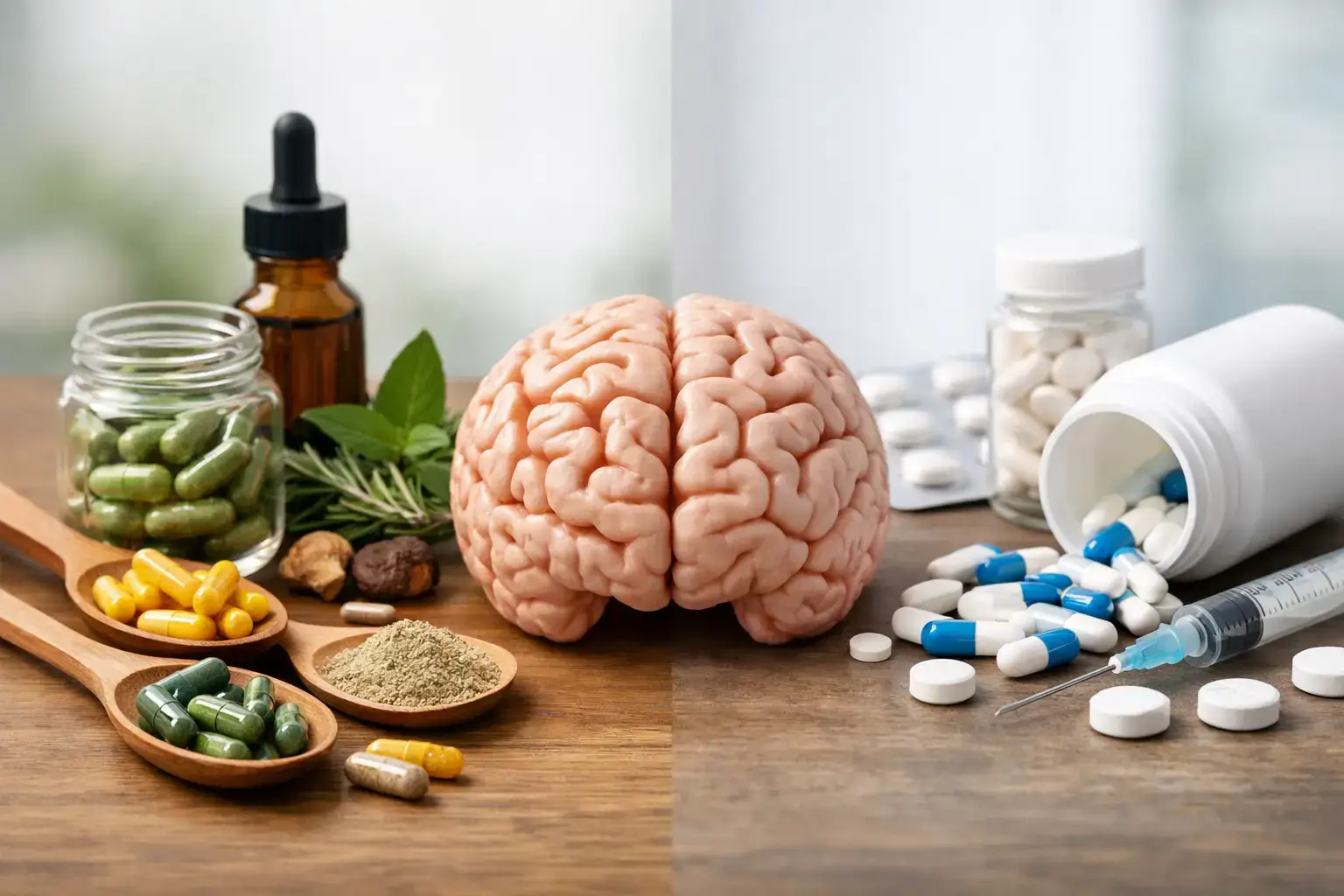
Brain Wellness Supplements vs Prescription Drugs
A memory slip can feel like a warning siren. So can a parent’s dementia diagnosis, a Parkinson’s tremor, brain fog that will not lift, or the growing fear that “normal aging” is becoming something more. That urgency is why the conversation around brain wellness supplements vs prescription drugs matters. These are not interchangeable paths, and pretending they are does a disservice to people trying to protect their independence.
Prescription medicine can be essential. Supplements may offer a different kind of support. The smarter question is not which side wins. It is whether your brain-care strategy is addressing symptoms, disease processes, daily resilience, and the conditions that help the brain maintain itself.
Brain Wellness Supplements vs Prescription Drugs: Different Jobs
Prescription drugs are designed to treat defined medical conditions. In neurology, they may help replace a missing chemical messenger, reduce symptoms, slow progression for select patients, or address related concerns such as depression, sleep disruption, anxiety, seizures, and blood pressure.
For example, medications used in Parkinson’s disease can improve movement by influencing dopamine signaling. Certain Alzheimer’s medications may temporarily support cognition or daily function for some people. Newer disease-modifying treatments may be appropriate for carefully selected patients with early Alzheimer’s disease and confirmed amyloid pathology. These are significant medical tools, not failures of imagination.
But many patients eventually discover the limits of a symptom-first model. A medication may help one pathway while leaving other drivers of brain vulnerability untouched. It may also bring side effects, dosing complexity, expense, monitoring requirements, or benefits that feel modest compared with the stakes.
Brain wellness supplements occupy a different lane. They are not prescription treatments and should not be presented as cures for Alzheimer’s, Parkinson’s, dementia, or any other disease. Their role is to provide nutritional and botanical support for the systems involved in brain maintenance, including inflammation balance, antioxidant defenses, circulation, sleep quality, cellular energy, and the brain’s natural clearance processes.
That distinction matters. A supplement is not a substitute for diagnosis, emergency care, or a medication your clinician has prescribed. Yet it can be part of a broader plan for people who refuse to accept that brain support begins and ends with symptom management.
The Brain Is Not Just a Chemical Imbalance
For decades, many neurological strategies have focused heavily on neurotransmitters, plaques, or individual symptoms. Those targets can matter. But the brain is also a living maintenance system. It uses blood flow, immune activity, sleep, metabolism, and fluid movement to repair, protect, and clear metabolic waste.
One of the most compelling areas of emerging research is the glymphatic system, often called the brain’s dishwasher. During quality sleep, cerebrospinal fluid moves through brain tissue and helps carry away certain metabolic waste products. Researchers are still learning exactly how this system changes with age and disease, but the central idea is powerful: a brain that cannot clear efficiently may be operating with a clogged sink.
Poor sleep, aging, vascular dysfunction, chronic stress, head injury, alcohol excess, sedentary behavior, and metabolic disease can all place pressure on the conditions a healthy brain needs. No capsule can erase those forces. But a thoughtfully formulated supplement may support the biological terrain in which maintenance and recovery occur.
This is where the comparison becomes more useful. Prescription drugs often target a specific diagnosed problem. Brain wellness formulas may be intended to support the wider environment around brain health. One is not automatically superior. They answer different needs.
Where Prescription Drugs Earn Their Place
A challenger mindset should never become reckless. If someone has sudden confusion, one-sided weakness, a severe new headache, loss of consciousness, suicidal thoughts, hallucinations, or rapidly worsening memory, they need prompt medical evaluation. Those are not problems to self-treat with supplements.
Likewise, people with diagnosed Parkinson’s disease, epilepsy, major depression, dementia, stroke history, multiple sclerosis, or other neurological conditions should not stop or reduce a prescribed medication without the clinician managing their care. Abrupt changes can create real harm.
Prescription drugs may be especially valuable when symptoms are interfering with safety or function. A person who cannot sleep for days, is falling because of uncontrolled movement symptoms, or is experiencing distressing cognitive or behavioral changes deserves medical treatment, not false choices.
The trade-off is that prescription care can be narrow by design. A drug developed to affect a receptor, enzyme, protein, or signaling pathway is not necessarily designed to improve diet, sleep architecture, hydration, physical activity, or whole-body inflammation. It cannot do every job.
What to Expect From a Brain Wellness Supplement
A credible brain supplement should be approached with both hope and standards. Look for transparent labeling, meaningful doses, clear ingredient rationale, quality manufacturing, and a company that does not promise to diagnose, treat, cure, or prevent disease.
The best results also tend to come from consistency rather than dramatic overnight expectations. If a formula supports sleep quality, oxidative balance, circulation, or natural maintenance pathways, the effect may be gradual and easier to notice over weeks or months. Some people report clearer focus, steadier energy, or better resilience. Others notice little. Biology is personal, and underlying medical conditions matter.
My Brain Restore is built around a systems-level premise: supporting the brain’s natural waste-clearing and maintenance pathways rather than chasing a single symptom alone. That glymphatic-centered perspective is not a replacement for medical care. It is an answer to a question too many people have been left asking: what are we doing to support the brain’s cleanup crew?
Even natural ingredients can interact with medications. This is particularly relevant for people taking blood thinners, diabetes medications, blood pressure drugs, sedatives, antidepressants, seizure medications, or multiple prescriptions. Bring the complete supplement label to a pharmacist or clinician who can review it in context.
The Decision Is Often “Both,” Not “Either”
For many families, the practical path is integrated care. A neurologist manages diagnosis and prescription treatment. A primary-care clinician tracks cardiovascular and metabolic risk. A supplement, if appropriate, supports broader wellness goals. Daily habits create the foundation none of the above can replace.
That foundation is unglamorous but powerful: protect sleep, move regularly, manage blood pressure and blood sugar, eat in a way that supports vascular health, stay socially and mentally engaged, and treat hearing loss, depression, sleep apnea, and chronic stress seriously. These are not side notes in brain health. They are central mechanisms.
There are also situations where supplements may be the more logical starting point. Someone with no diagnosis who wants proactive support may not need a prescription drug at all. A caregiver looking to improve sleep, nutrition, and daily resilience may reasonably consider a quality formula while also arranging proper screening. A patient whose medication is helping but who wants a more comprehensive wellness routine may discuss adding a supplement with their care team.
The wrong choice is treating either approach as magic. Medication is not a guarantee. Supplements are not a shortcut. The brain is too complex, and the consequences of decline are too serious, for simplistic promises.
Questions Worth Asking Before You Choose
Start with the clearest question: what problem are you trying to solve? New confusion, progressive memory loss, tremor, personality changes, frequent falls, or trouble managing finances require clinical assessment. A supplement should never delay that step.
Then ask what outcome matters most. Are you looking for symptom relief, disease-specific treatment, prevention support, better sleep, mental clarity, or a way to reinforce healthier habits? A precise goal makes it easier to judge whether a prescription, a supplement, lifestyle changes, or a combination makes sense.
Finally, ask what evidence and safety guardrails are present. Prescription drugs have formal approval standards and known risks, though they are not risk-free. Supplements have a different regulatory framework, so product quality and honest communication matter enormously. Be wary of anyone selling certainty where neuroscience still has questions.
Your brain is not a lost cause, and it is not merely a collection of symptoms waiting for the next prescription. Give medical care the respect it deserves. Give the brain’s daily maintenance systems the attention they have earned. Then build a plan that protects the life you are still here to live.
Similar Posts
The Future of Brain Clearance Science Is Here
The future of brain clearance science shows how sleep and glymphatic flow could influence lifelong cognitive resilience, and what families can do now.
Natural Options for Parkinson’s Families That Matter
Natural options for Parkinson’s families include sleep, movement, food, stress relief, and informed supplement choices that support daily resilience today.
Top Habits for Healthy Brain Aging That Matter
Learn the top habits for healthy brain aging, from restorative sleep and movement to connection, nourishment, and protecting the brain’s cleanup system.
Best Supplements for Neurological Wellness Support
Learn how the best supplements for neurological wellness support can complement sleep, movement, and glymphatic clearance for lasting brain resilience.
Best Supplements for Dementia Prevention
Learn the best supplements for dementia prevention, what the evidence says, and how to support brain health, sleep, and long-term resilience.
Brain Clearance Pathway Support That Matters
Learn how brain clearance pathway support may help the glymphatic system, sleep-driven repair, and long-term cognitive resilience naturally.