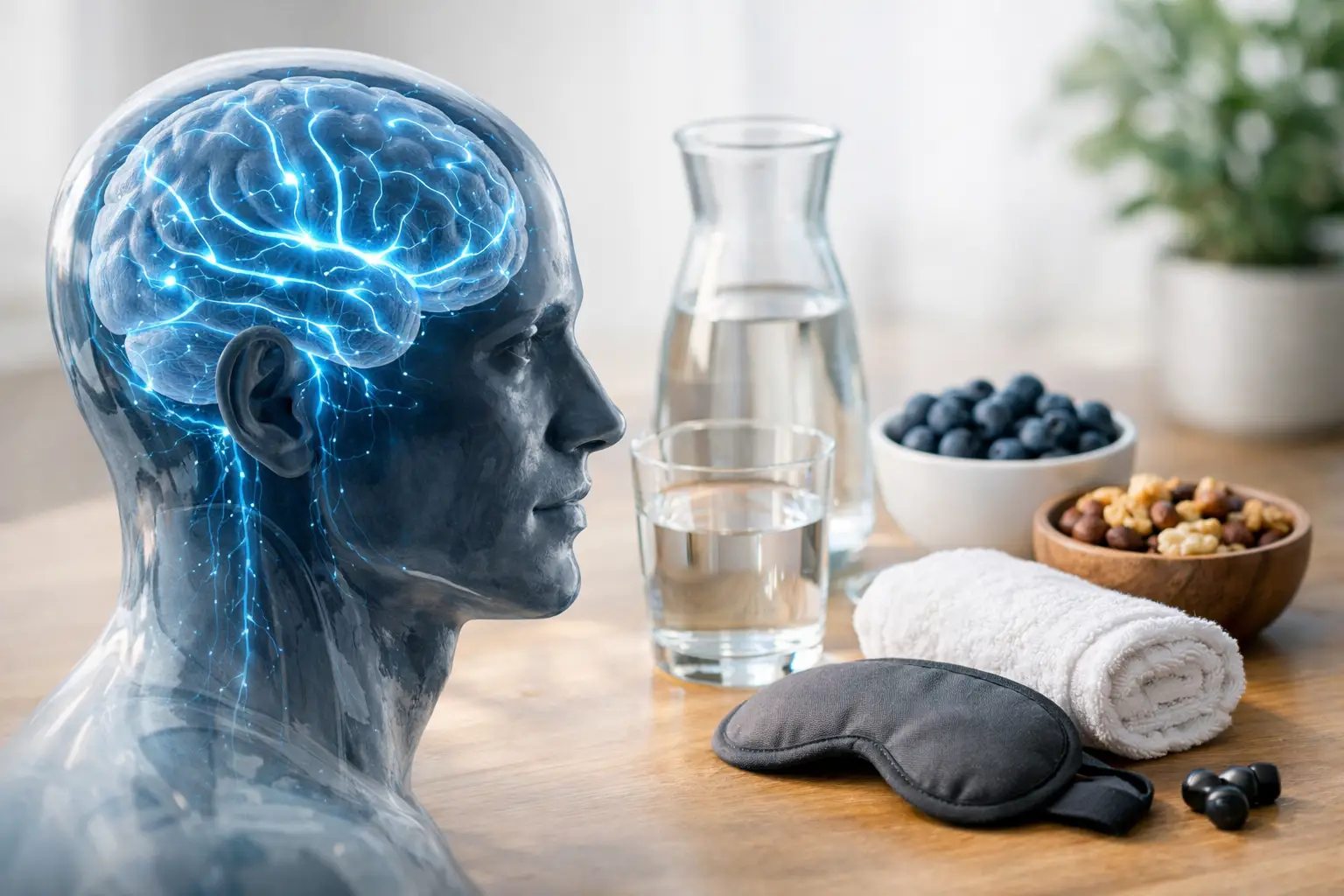
A Practical Guide to Glymphatic Health
If your brain feels foggy, your sleep leaves you unrefreshed, or you are watching memory changes in yourself or someone you love, this guide to glymphatic health matters more than most people realize. The glymphatic system is the brain’s waste-clearing network – the internal dishwasher that helps move out metabolic debris, inflammatory byproducts, and proteins that should not be allowed to build up unchecked.
That idea should change how we think about brain support. For decades, too much of the conversation around cognitive decline focused on managing symptoms after the sink was already clogged. But the brain is not just an electrical organ. It is also a maintenance organ. If its cleanup system slows down, garbage accumulates. And when garbage accumulates, function suffers.
What glymphatic health really means
Glymphatic health refers to how well the brain clears waste through a network tied closely to cerebrospinal fluid, blood vessels, and support cells called glia. This system is most active during sleep, especially deep, restorative sleep. That is one reason poor sleep is not just frustrating – it can be neurologically expensive.
Think of the glymphatic system like overnight sanitation for the brain. During the day, your neurons are active, producing energy, firing signals, and generating normal waste. At night, the brain shifts into a cleanup state, moving fluid through tissues and helping remove what does not belong. If that process is impaired night after night, the consequences may not show up immediately. But over time, the risk picture changes.
This is where the conversation becomes urgent for adults concerned about Alzheimer’s disease, Parkinson’s disease, dementia, and age-related decline. No honest educator should claim glymphatic support is a magic shield. It is not. But ignoring the brain’s clearance pathways while talking about long-term neurological resilience makes no sense.
Why a guide to glymphatic health starts with sleep
If there is one place to begin, it is sleep quality. Not just hours in bed. Actual restorative sleep.
The glymphatic system appears to work best when the brain is in the right physiological state for repair. That means fragmented sleep, late-night stimulation, alcohol-heavy evenings, untreated sleep apnea, and chronic stress can all interfere with the conditions the brain needs to clear waste efficiently. You can take all the nootropic ingredients in the world, but if sleep is broken, the sink keeps backing up.
For many people, this is where the first trade-off appears. A packed schedule, caregiving demands, and stress make ideal sleep habits hard to maintain. That is real. Still, brain maintenance does not care how busy life is. Consistently short or poor sleep is one of the fastest ways to work against glymphatic function.
If you want practical progress, start by setting a consistent sleep window, reducing bright light exposure late at night, cooling the bedroom, and addressing snoring or suspected apnea with a medical professional. The goal is not perfection. The goal is giving the brain a reliable window for cleanup.
Circulation, movement, and fluid flow
A strong guide to glymphatic health also has to talk about circulation. Brain clearance does not happen in isolation. It depends on fluid movement, vascular health, and the mechanical rhythms of the body.
That is one reason sedentary living is such a problem. Regular movement supports blood flow, metabolic balance, and the broader environment in which the brain’s maintenance systems operate. You do not need to train like an athlete. But daily walking, light resistance work, and consistent physical activity create conditions that are far more favorable than long stretches of inactivity.
Hydration matters too, although this is where hype often creeps in. Drinking excessive amounts of water is not a shortcut to a cleaner brain. The point is steady hydration, not extremes. Dehydration can stress the body and impair normal physiology, but more is not always better.
Posture and breathing also deserve attention. Shallow breathing, chronic tension, and poor sleep positioning may influence sleep quality and oxygenation. Some research has raised questions about whether sleep position affects glymphatic activity. The science is still evolving, so it would be irresponsible to overstate the point. But comfortable, supported sleep that allows deeper rest is clearly better than tossing, turning, and waking every hour.
Inflammation is part of the traffic jam
When people hear “brain waste,” they often think only of protein buildup. But glymphatic health is also tied to inflammation, oxidative stress, and the broader burden the brain has to manage.
A body under constant inflammatory pressure creates a harder job for every maintenance system it has. Highly processed diets, blood sugar instability, chronic stress, poor sleep, environmental exposures, and low activity all add weight to the system. This does not mean you need a perfect anti-inflammatory lifestyle. It means the brain does better when you stop pouring fuel on the fire.
A more supportive approach usually includes protein sufficiency, colorful plant foods, healthy fats, and fewer ultra-processed foods. For some people, stabilizing blood sugar is especially important because energy swings often track with mental fog, fatigue, and poor sleep. It depends on the individual, their medications, their health status, and what they can sustain. The best plan is not the most extreme one. It is the one you can actually live with.
Stress can quietly sabotage glymphatic function
Many adults worried about cognitive decline are carrying years of unrelenting stress. Caregiving stress. Financial stress. Health anxiety. Grief. That burden is not just emotional. It is biological.
When stress becomes chronic, sleep suffers, inflammation rises, blood pressure can drift upward, and recovery gets weaker. The brain remains on alert when it should be shifting into repair mode. That is a problem if your goal is better glymphatic support.
No one needs a lecture about “just relax.” What helps is a realistic stress-lowering practice that the nervous system can trust. That might be a daily walk without your phone, morning sunlight, prayer, breath work, gentle stretching, or a strict evening routine that tells the body it is safe to power down. Small, repeated signals often do more than dramatic but inconsistent efforts.
Supplements and glymphatic support
This is the part people often want first, but it should not come first. Supplements can support the terrain. They do not replace sleep, movement, or basic metabolic health.
That said, targeted nutraceuticals may play a role in a broader glymphatic strategy, especially when they are built around neuroinflammation, oxidative stress, vascular support, and the brain’s natural maintenance pathways. Botanical compounds and other nutrients can be valuable when they are chosen for mechanism, quality, and synergy rather than marketing excitement.
This is where a systems-level view matters. Brain support should not be reduced to “boosting memory” for a few hours. The real question is whether you are helping the brain maintain itself over time. That is the philosophy behind brands like My Brain Restore™ – focusing attention on the clogged-sink problem instead of pretending symptoms exist in isolation.
Still, there are trade-offs. People with complex conditions, medication regimens, or neurodegenerative diagnoses should be cautious about self-experimentation. Natural does not mean consequence-free. A smart plan respects both innovation and clinical reality.
What to focus on first if you feel overwhelmed
If all of this feels like a lot, narrow it down. Start with the factors that most strongly shape the brain’s cleanup window: sleep quality, daily movement, metabolic stability, stress load, and consistent routines. Those five areas are not flashy, but they are foundational.
You do not need to fix everything this week. If sleep is terrible, start there. If you are barely moving, begin with ten-minute walks after meals. If evenings are chaotic, create a wind-down ritual and protect it. If inflammation is high because your diet is built around convenience foods, improve one meal at a time.
That is how real neurological support works. Not through one heroic decision, but through repeated conditions that tell the brain, night after night, “Now you can clean house.”
The deeper point of a guide to glymphatic health
What makes glymphatic health so powerful as a framework is that it restores agency. It tells people the brain is not just a victim of time or genetics. Yes, risk is real. Yes, disease is serious. Yes, no responsible person should offer false certainty. But the brain has maintenance pathways, and supporting those pathways is a rational, science-aligned step.
For people who have been told to wait, watch, and manage decline when it arrives, that message lands hard. Because deep down, most families already understand the analogy. If the dishwasher stops draining, you do not spray air freshener into the kitchen and call it solved. You clear the blockage.
That same logic belongs in the brain-health conversation. Not as hype. As common sense backed by emerging science. Protect the hours when the brain repairs. Reduce the pressures that jam the system. Support the body that supports the brain.
Your next step does not need to be dramatic. It just needs to be honest. Look at the habits that either help your brain clean itself or keep clogging the sink, and choose one change your future self will be grateful for.
Similar Posts
7 Natural Ways to Support Alzheimers Patients
Learn natural ways to support Alzheimers patients through sleep, movement, nutrition, routine, and brain-friendly habits that protect daily function.
A Nighttime Brain Recovery Routine That Works
Build a nighttime brain recovery routine that supports deep sleep, glymphatic clearance, and the daily habits that protect long-term cognitive resilience.
2X Active Formula Review for Brain Support
An honest 2X Active Formula review: glymphatic support, what the brain-clearance approach means, who may consider it, and what supplements cannot promise.
How to Choose a Cognitive Wellness Supplement
Learn how to choose a cognitive wellness supplement by assessing evidence, ingredients, dosage, testing, and the brain-clearance habits that matter most.
Can Glymphatic Support Improve Memory?
Can glymphatic support improve memory? Learn how the brain’s waste-clearing system may affect recall, sleep, aging, and cognitive resilience.
7 Best Herbs for Memory Retention, Explained
Learn which herbs may support memory retention, what research says, and why sleep and brain clearance still set the foundation for daily cognitive health.