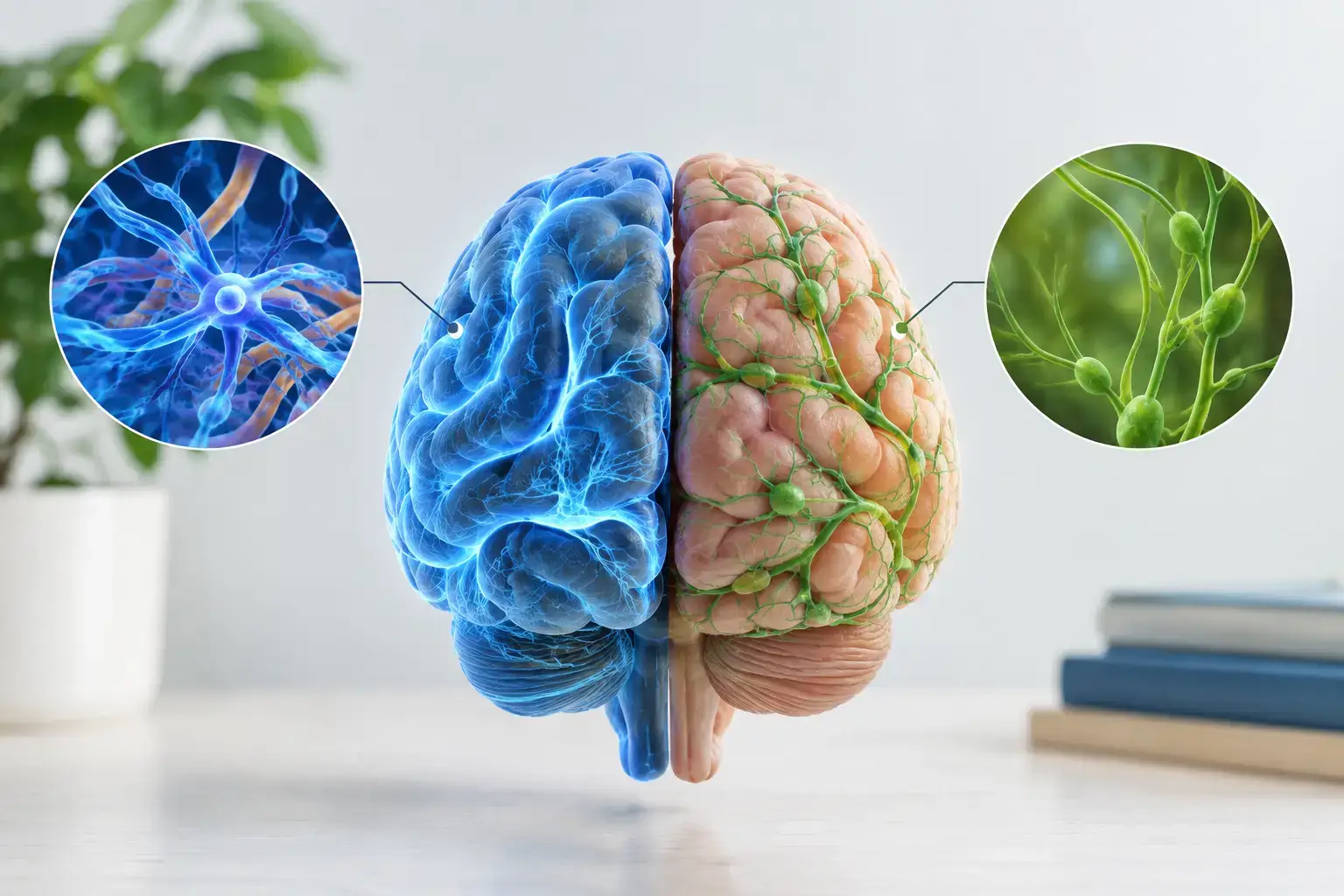
Glymphatic Function Versus Lymphatic Function
A swollen ankle and a foggy morning may both involve fluid movement, but they do not point to the same cleanup system. Glymphatic function versus lymphatic function is not a minor anatomy distinction. It changes how we think about brain maintenance, sleep, aging, and the slow accumulation of stressors that can threaten independence over time.
Your body has a well-known drainage network: the lymphatic system. Your brain has a related but distinct waste-clearance pathway: the glymphatic system. One works across the body through lymphatic vessels and lymph nodes. The other operates within the central nervous system, moving fluid through brain tissue in a process that becomes especially active during sleep.
For anyone concerned about memory changes, Parkinson’s, Alzheimer’s risk, cognitive decline, or simply protecting the brain they rely on every day, that distinction deserves more than a passing glance.
Glymphatic Function Versus Lymphatic Function: The Core Difference
The lymphatic system is part of the body’s circulation and immune defense infrastructure. It collects excess fluid, proteins, cellular debris, and other material from tissues throughout the body. Lymphatic vessels transport that fluid – called lymph – toward lymph nodes, where immune cells help monitor for threats. Eventually, lymph returns to the bloodstream.
Think of it as a broad municipal drainage and inspection network. It helps manage fluid balance in your arms, legs, organs, and connective tissues while giving the immune system a place to assess what is moving through the body.
The glymphatic system is different because the brain has unique rules. Brain tissue is protected by the blood-brain barrier, packed tightly with neurons and support cells, and housed inside the skull. It cannot depend on the same vessel-rich lymphatic network that serves much of the body.
Instead, cerebrospinal fluid moves along spaces surrounding blood vessels and exchanges with fluid between brain cells. This flow helps carry metabolic waste away from brain tissue. The term “glymphatic” reflects the key role of glial cells, particularly astrocytes, in supporting this fluid movement, along with its lymphatic-like waste-clearance role.
The brain’s dishwasher is not a literal pipe system. It is a coordinated fluid-exchange process. And like any cleanup process, it depends on timing, circulation, cellular health, and an environment that allows it to work.
Why the Brain Needs Its Own Cleanup Pathway
Every active brain cell produces waste. That is not a sign of failure. It is the ordinary cost of being alive, thinking, moving, remembering, reacting, and repairing. The problem begins when the balance between production and clearance is repeatedly disrupted.
Research has drawn attention to the glymphatic system because it may help clear proteins and metabolites associated with normal brain activity, including beta-amyloid and tau. These proteins are closely studied in Alzheimer’s disease and other neurodegenerative conditions. That does not mean poor sleep or impaired clearance alone causes dementia. These diseases are complex, involving genetics, vascular health, inflammation, metabolism, environmental factors, and more.
But it does mean the old idea that the brain simply works until it breaks is incomplete. The brain performs maintenance. It needs periods of restoration. And when those restorative conditions are chronically compromised, the consequences may compound over years.
This is where the clogged-sink analogy becomes useful. A sink can tolerate daily use when water flows freely down the drain. If the drain slows, the issue may not be obvious on day one. Keep adding debris, grease, and water, however, and eventually the backup becomes impossible to ignore. Brain clearance is more nuanced than plumbing, but the principle is recognizable: throughput matters.
Sleep Is a Major Divider
The most important practical difference between glymphatic and lymphatic activity may be sleep. The body’s lymphatic system works continuously, though movement, breathing, muscle contractions, and cardiovascular function all influence lymph flow.
Glymphatic clearance appears to be especially active during sleep, with deep non-REM sleep receiving particular attention. During these restorative stages, changes in brain-cell activity and fluid dynamics may create more favorable conditions for cerebrospinal fluid exchange and waste removal.
That gives new weight to a familiar warning: sleep is not idle time. It is scheduled maintenance for the organ that holds your memories, personality, judgment, balance, and capacity to live independently.
Poor sleep does not automatically mean glymphatic dysfunction, and one bad night does not doom your brain. The real concern is chronic disruption: fragmented sleep, untreated sleep apnea, irregular sleep schedules, heavy alcohol use, unmanaged stress, nighttime light exposure, and health conditions that interfere with restorative sleep.
If someone snores loudly, wakes gasping, experiences severe daytime sleepiness, or notices worsening cognition, that is not a situation for guesswork or supplements alone. Medical evaluation matters. Sleep apnea, cardiovascular disease, medication effects, depression, and neurological conditions all deserve professional attention.
The Role of Brain Lymphatic Vessels
There is one detail that often causes confusion. Scientists have identified lymphatic vessels in the membranes surrounding the brain, called the meninges. So does the brain have lymphatics after all?
Yes, but that does not make the glymphatic system and lymphatic system identical. Meningeal lymphatic vessels appear to help drain fluid and immune-related material from around the brain toward lymph nodes. The glymphatic pathway concerns fluid movement through brain tissue itself. They are connected parts of a broader clearance story, but they do different jobs in different locations.
A useful way to picture it is this: glymphatic flow helps move waste from the rooms of the house, while meningeal lymphatic vessels help carry material away from the property. The body-wide lymphatic system then handles transport, filtration, and immune surveillance beyond that point.
Scientists are still refining this map. That uncertainty is not a weakness in the research. It is evidence that brain science is moving beyond outdated, oversimplified models. We are learning that neurological resilience may depend not only on what the brain produces, but also on what it can clear.
What Can Support Healthy Clearance Conditions?
No wellness routine can promise to prevent Alzheimer’s, reverse Parkinson’s, or repair neurological disease. Anyone making that promise is selling certainty where medicine has none. But supporting the conditions associated with healthy sleep, circulation, metabolism, and nervous-system recovery is a rational act of personal agency.
Start with sleep regularity. A consistent wake time, a dark and cool bedroom, morning daylight, and fewer late-night stimulants can support circadian rhythm. If sleep is persistently poor, investigate the cause rather than accepting exhaustion as part of aging.
Movement matters too. Regular physical activity supports cardiovascular health, glucose regulation, mood, and sleep quality. Because blood-vessel pulsation and overall circulation may influence brain fluid dynamics, protecting vascular health is not merely a heart issue. It is a brain issue.
Alcohol deserves an honest look. Many people use it as a sleep aid, even though it can fragment sleep later in the night and reduce restorative quality. The trade-off is especially worth considering for people already worried about memory, balance, or family history.
Nutrition is not a magic drain cleaner, but it shapes the terrain. A pattern centered on minimally processed foods, adequate protein, fiber-rich plants, healthy fats, and stable blood sugar supports whole-body metabolic health. Hydration is sensible, though simply forcing excessive water intake will not “flush” the brain.
Targeted nutritional support may also be part of a broader plan, particularly for adults looking for non-pharmaceutical ways to support brain wellness. My Brain Restore approaches this conversation through the overlooked lens of brain clearance and neurological maintenance. Still, supplements should complement foundational habits and clinician-guided care, not replace either.
A Better Question Than “What Is the Best Brain Pill?”
When fear of cognitive decline takes hold, people understandably search for one decisive answer: the best supplement, the newest drug, the one test that will settle everything. But brain resilience is rarely built through one lever.
The more useful question is: what is making my brain’s maintenance work harder than it needs to? For one person, the answer may be undiagnosed sleep apnea. For another, it may be inactivity, uncontrolled blood pressure, chronic isolation, diabetes, medication side effects, or years of poor sleep. For many, it is a combination.
The glymphatic system does not erase the need for conventional medical care. It expands the conversation. It reminds us that the brain is not just an electrical machine to stimulate or sedate. It is living tissue with circulation, immune activity, fluid exchange, energy demands, and waste-removal needs.
Treat your brain’s nightly maintenance window as something worth defending. The choices that protect it may seem ordinary, but protecting the ordinary functions of sleep, movement, and recovery is how you defend the extraordinary life your brain makes possible.
Similar Posts
Top Nutrients for Brain Longevity That Matter
Learn which top nutrients for brain longevity support cellular energy, inflammation balance, circulation, and overnight brain clearance as you age.
How to Choose a Cognitive Wellness Supplement
Learn how to choose a cognitive wellness supplement by assessing evidence, ingredients, dosage, testing, and the brain-clearance habits that matter most.
How to Support Glymphatic Drainage
Learn how to support glymphatic drainage with sleep, movement, hydration, and daily habits that help the brain clear waste more efficiently.
A Supplement Quality Guide for Brain Health
Use this supplement quality guide to assess identity, purity, potency, and brain-focused formulation before you buy a product for your daily routine now.
Glymphatic Support vs Nootropics Explained
Glymphatic support vs nootropics compares brain cleanup with mental stimulation, helping you build a smarter, sleep-first support strategy for adults.
How to Support Caregiver Resilience Without Burnout
Learn how to support caregiver resilience with practical routines for sleep, stress, brain health, boundaries, and help when a loved one needs more care.