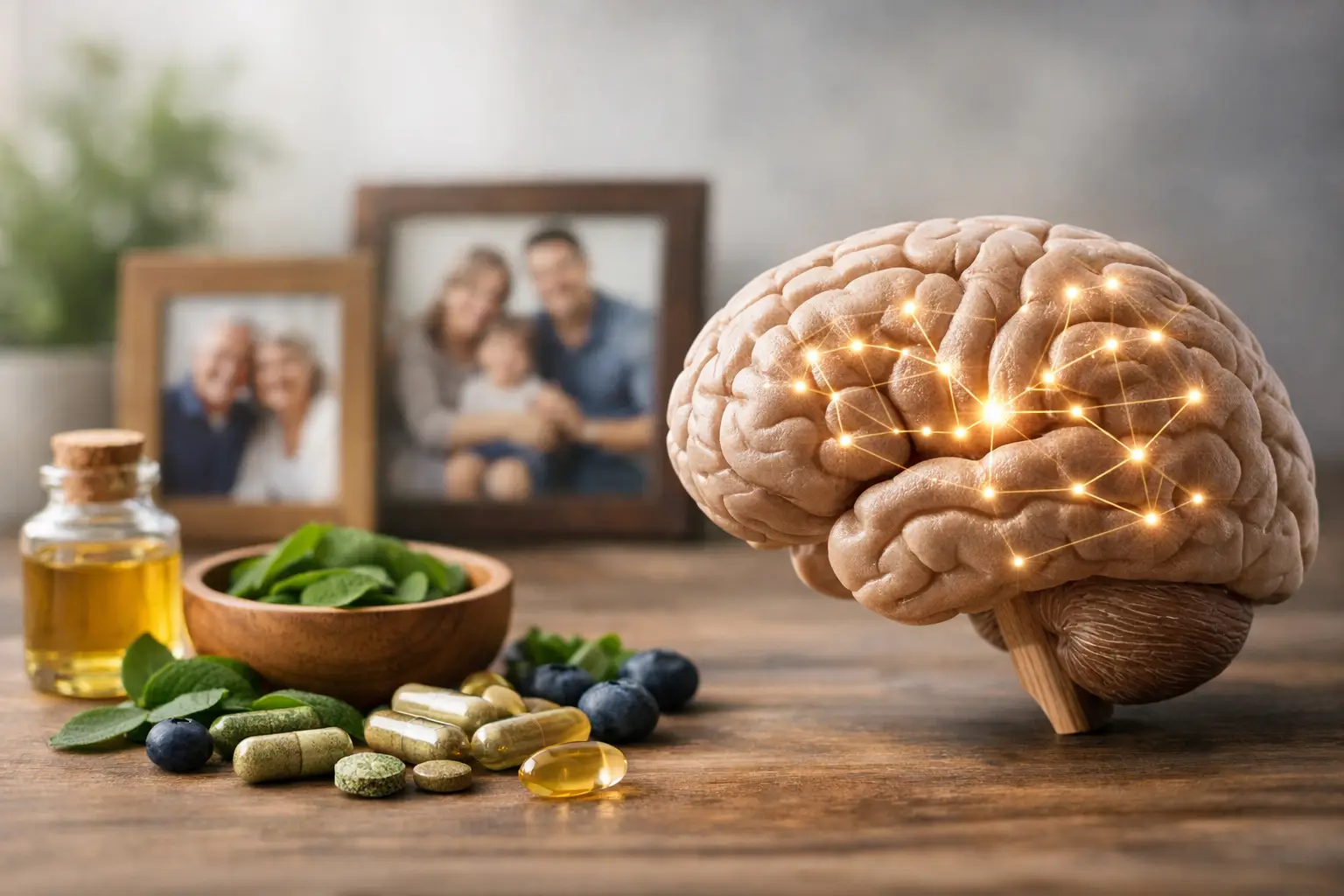
Natural Brain Support for Family History Risks
A parent starts repeating stories. An older sibling develops a tremor. A grandparent’s Alzheimer’s diagnosis becomes the sentence no one wants to say out loud: “Could this happen to me?” Natural brain support for family history concerns begins with a clear-eyed answer. Genetics can influence risk, but they are not a final verdict. What you do repeatedly – especially years before symptoms appear – still matters.
That is not false reassurance. It is a call to stop waiting for a crisis. Brain health is not built in the neurologist’s office after decline has become obvious. It is supported every night, every meal, every walk, and every decision that protects the brain’s ability to repair, maintain, and clear what does not belong there.
Family History Is a Signal, Not a Sentence
A family history of Alzheimer’s disease, Parkinson’s disease, dementia, stroke, or other neurological conditions deserves attention. It can reflect inherited genes, shared environments, similar dietary patterns, chronic stress, sleep habits, toxin exposures, and cardiometabolic risk. Sometimes it reflects a combination of all of them.
Some genetic variants are associated with greater risk for certain conditions, but risk is not destiny. Even when genetic risk is real, it does not tell the full story of when symptoms might occur, whether they will occur, or how quickly the brain may change. That distinction matters because fear can either freeze a family or move it toward action.
The conventional model often waits for symptoms, then focuses on managing what has already become visible. But neurological decline can develop quietly over many years. A more forward-looking approach asks a better question: What conditions help the brain stay resilient before the damage accumulates?
Why Brain Clearance Belongs in the Conversation
The brain is metabolically demanding. Every day, its cells use energy, communicate, repair membranes, and produce metabolic byproducts. Like any active system, it needs maintenance. One of the most compelling areas of modern neuroscience is the glymphatic system, often described as the brain’s cleaning or waste-clearance network.
During quality sleep, fluid movement around brain cells helps carry away certain waste products. Think of a kitchen sink. If water is flowing and the drain is clear, daily messes move through. If the drain slows, residue builds up. The brain is far more complex than a sink, of course, but the analogy makes the point: maintenance matters.
Researchers are still learning exactly how glymphatic function relates to aging and neurodegenerative disease. It would be irresponsible to claim that supporting this system prevents or cures Alzheimer’s, Parkinson’s, or dementia. Yet the direction of the science is serious enough that no family with a neurological history should dismiss sleep, circulation, inflammation, and metabolic health as side issues. They are part of the terrain in which the brain either struggles or adapts.
Natural Brain Support for Family History Starts Earlier Than Most People Think
The most powerful interventions are rarely dramatic. They are foundational, and their value compounds. For someone worried about family history, the goal is not to find one magic capsule or one perfect protocol. It is to reduce the pressures that age the brain while strengthening the conditions that support repair and clearance.
Protect sleep like it is neurological maintenance
Sleep is not passive downtime. It is a major maintenance window for the brain. Fragmented sleep, untreated sleep apnea, chronic insomnia, and a schedule that constantly disrupts circadian rhythm can work against cognitive performance and long-term neurological resilience.
Aim for a consistent sleep and wake time, a dark and cool bedroom, and a wind-down routine that does not end with bright screens and stressful headlines. If snoring, gasping, daytime exhaustion, or morning headaches are part of life, bring them to a clinician. Sleep apnea is common, underdiagnosed, and particularly relevant when brain health is already a concern.
Move blood, oxygen, and energy through the system
The brain depends on a healthy vascular system. Regular movement supports circulation, blood sugar regulation, mood, sleep quality, and cardiovascular health – all of which affect the brain.
This does not require punishing workouts. Brisk walking, resistance training, cycling, swimming, balance work, and physically active hobbies all count. The best routine is one you will continue. For many adults, combining aerobic movement with strength training is more practical and sustainable than chasing an extreme fitness plan for two weeks and abandoning it.
Treat metabolic health as brain health
Insulin resistance, high blood pressure, elevated blood sugar, excess visceral fat, and chronic inflammation do not stop at the neck. They can affect blood vessels and energy regulation throughout the body, including the brain.
Build meals around protein, fiber-rich plants, healthy fats, and minimally processed foods more often than not. This is not about perfection or fear of every carbohydrate. It is about reducing the daily metabolic roller coaster that leaves many people tired, hungry, inflamed, and dependent on quick sugar for energy. If you have diabetes, hypertension, or high cholesterol, work with a qualified healthcare professional rather than trying to self-manage a serious condition.
Give the brain a reason to stay engaged
Cognitive reserve is the brain’s ability to cope with changes and maintain function. Learning, conversation, meaningful work, music, reading, problem-solving, volunteering, and social connection all challenge the brain in different ways.
The point is not endless crossword puzzles. It is novelty and participation. Learn the names of your grandchildren’s favorite games. Take a class. Practice a skill that is difficult enough to demand attention. Isolation is not merely emotional pain. For many people, it becomes one more pressure on a brain already carrying stress.
Where Supplements Fit – and Where They Do Not
Natural compounds can be a meaningful part of a broader brain-support strategy, particularly when they are selected for mechanisms relevant to inflammation, oxidative stress, circulation, sleep, and cellular maintenance. But supplements should support the foundation, not replace it.
Be cautious with products that promise to reverse dementia, eliminate Parkinson’s symptoms, or guarantee protection based on a family history. Those promises take advantage of a very real fear. A responsible formula should be transparent about its purpose and should not ask you to ignore medications, sleep disorders, vascular risk, or early symptoms that need medical evaluation.
My Brain Restore approaches brain support through the overlooked question of clearance and maintenance – the brain’s dishwasher, not just its messaging chemicals. That systems-level perspective is worth considering, especially for people who are tired of being told that waiting for decline is the only option. Still, any supplement should be reviewed with a clinician or pharmacist if you take prescription medications, have a medical condition, are pregnant, or are preparing for surgery.
Know When Prevention Becomes Evaluation
Prevention and early assessment can exist together. Do not explain away persistent cognitive or neurological changes simply because you are trying to stay positive. New memory problems that interfere with daily life, personality changes, worsening balance, tremor, trouble speaking, getting lost in familiar places, or major changes in sleep and behavior deserve professional attention.
A thorough evaluation may identify treatable contributors such as medication effects, thyroid issues, vitamin deficiencies, depression, hearing loss, sleep apnea, or vascular problems. Not every memory lapse signals dementia. But silence and denial do not protect the brain.
If genetic testing is on your mind, pause before ordering a direct-to-consumer test in isolation. Results can be emotionally heavy and easy to misinterpret. Genetic counseling can help you understand what a result can and cannot tell you, as well as whether testing would actually change your decisions.
Build a Family Culture of Brain Protection
Family history can become a source of helplessness, or it can become a reason to change the household pattern. Make walking a shared habit. Serve meals that support steadier energy. Talk openly about sleep apnea, blood pressure, depression, alcohol use, hearing changes, and memory concerns. Encourage older relatives to stay socially connected and physically active without treating them as fragile.
The goal is not to live in fear of a diagnosis that may never come. The goal is to make the next choice more protective than the last. Your genes may be part of your story, but they do not get to write every chapter.
Similar Posts
Brain Supplements for Older Adults That Matter
Brain supplements for older adults can support memory, focus, and brain cleanup pathways. Learn what matters, what to avoid, and why.
Caregiver Burnout Signs You Should Not Ignore
Caregiver burnout signs include exhaustion, anger, poor sleep, and brain fog. Spot the warning signals early and protect your health and capacity to care.
Can Glymphatic Support Improve Memory?
Can glymphatic support improve memory? Learn how the brain’s waste-clearing system may affect recall, sleep, aging, and cognitive resilience.
7 Natural Ways to Support Alzheimers Patients
Learn natural ways to support Alzheimers patients through sleep, movement, nutrition, routine, and brain-friendly habits that protect daily function.
Do Brain Waste Clearance Supplements Work?
Do brain waste clearance supplements work? Learn how glymphatic support, sleep, and key nutrients may help the brain’s cleanup system function.
Brain Wellness Supplements vs Prescription Drugs
Compare brain wellness supplements vs prescription drugs, including benefits, limits, safety, and how glymphatic support may fit into brain care today.