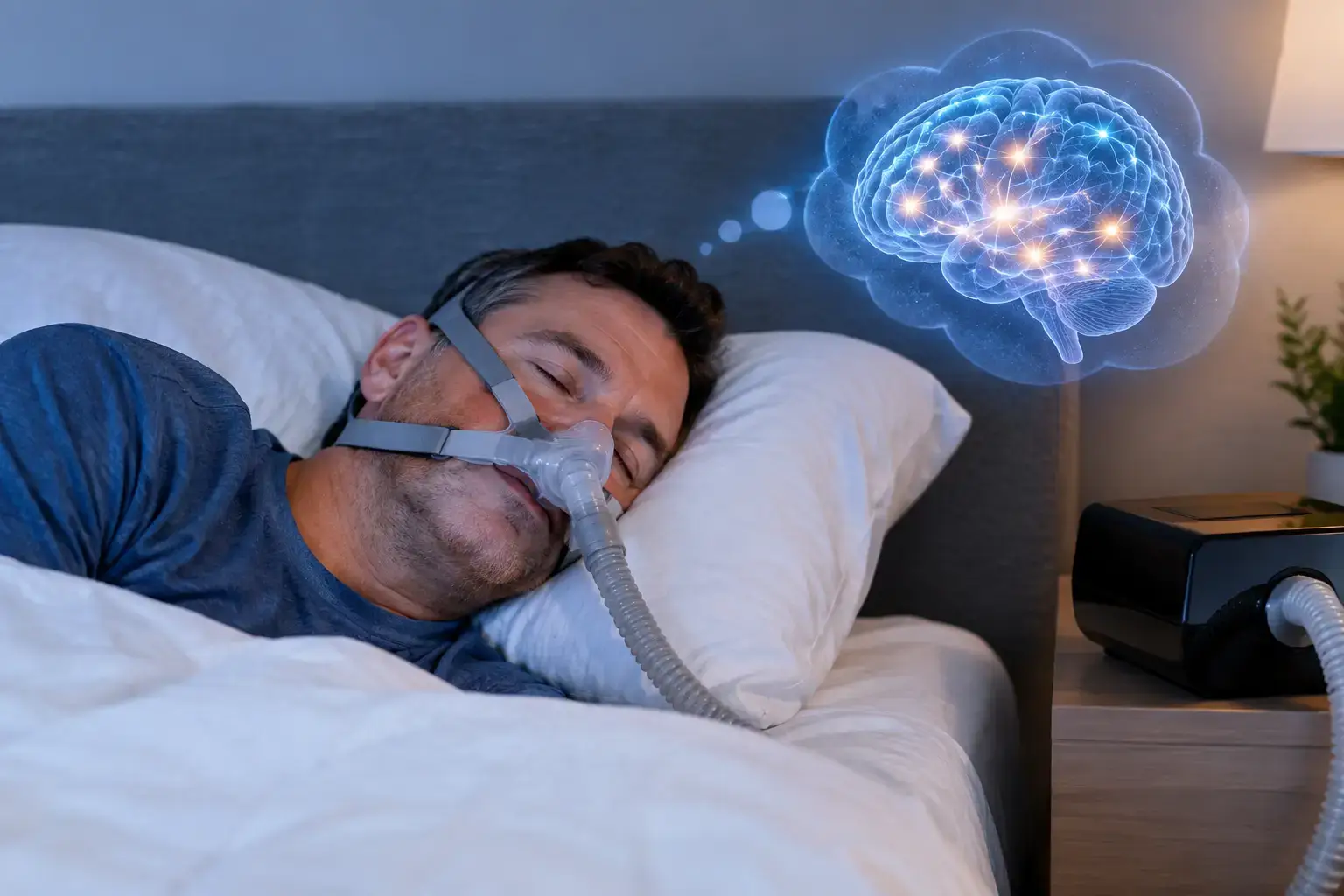
Sleep Apnea and Cognition During the Night
You can sleep for eight hours, wake up exhausted, and still be told your sleep was “normal” because you were in bed all night. But if your breathing repeatedly narrows or stops, the brain is not getting a full night of restoration. That is why sleep apnea and cognition belong in the same conversation – especially when forgetfulness, slower thinking, irritability, or frightening mental fog begin to feel familiar.
Sleep apnea is not merely a snoring problem. It can be a nightly stress event for the brain. Each breathing interruption may trigger a brief drop in oxygen, a surge in stress signaling, and a partial awakening that fragments the sleep stages needed for memory, attention, mood regulation, and cellular housekeeping. The person often does not remember these awakenings. Their brain does.
Why Sleep Apnea and Cognition Are Closely Connected
Obstructive sleep apnea occurs when tissues in the upper airway relax enough during sleep to restrict or block airflow. The body reacts fast. It works harder to breathe, heart rate and blood pressure can rise, and the brain briefly shifts toward wakefulness to reopen the airway. This cycle can occur dozens, or in severe cases hundreds, of times in a single night.
That matters because deep, consolidated sleep is not optional downtime. It is when the brain sorts information, strengthens certain memories, regulates immune activity, and supports its natural fluid movement and waste-clearance processes. Think of the brain as a city that handles essential maintenance after traffic dies down. When sleep is constantly interrupted, the overnight maintenance crew keeps getting pulled off the job.
The glymphatic system is often described as the brain’s dishwasher. During sleep, fluid movement around brain cells appears to help clear metabolic byproducts from the spaces between them. Researchers are still defining exactly how this system works in humans and how it relates to disease, but the broader message is clear: quality sleep supports brain maintenance. Repeatedly broken sleep does not give that work the same uninterrupted window.
For people worried about Alzheimer’s disease, Parkinson’s disease, dementia, or a family history of cognitive decline, this is not a reason for panic. It is a reason to take nighttime breathing seriously. Sleep apnea is one of the more actionable factors that can worsen cognitive performance and potentially compound other risks over time.
The Cognitive Signs That Are Easy to Miss
Many people expect sleep apnea to look like dramatic snoring and daytime sleepiness. Sometimes it does. Yet plenty of people do not identify as sleepy. They identify as less sharp.
The change may show up as trouble finding a familiar word, losing the thread of a conversation, walking into a room and forgetting why, or needing to reread the same paragraph. Planning, task-switching, reaction time, and sustained attention can suffer too. A caregiver may notice that a loved one is more emotionally reactive or less able to manage the ordinary details they once handled with ease.
None of these symptoms proves sleep apnea. Depression, medication effects, thyroid conditions, nutrient deficiencies, chronic pain, neurodegenerative disease, and ordinary aging can also affect cognition. But dismissing persistent brain fog as “just getting older” can leave a major contributor unaddressed.
Oxygen dips are only part of the story
Low oxygen levels can place stress on the brain and blood vessels, particularly when drops are frequent or substantial. But oxygen is not the entire explanation. Fragmented sleep can disrupt the architecture of the night even when a person does not have dramatic oxygen desaturation.
Deep sleep and REM sleep each serve different functions. Deep sleep is closely tied to physical restoration and aspects of memory processing. REM sleep is involved in emotional processing and learning. Sleep apnea can fracture both. You may technically spend enough hours in bed while getting far too little continuous, high-quality sleep.
The blood-vessel connection matters, too
Sleep apnea often travels with high blood pressure, insulin resistance, inflammation, atrial fibrillation, and other cardiometabolic concerns. These conditions can affect the small blood vessels that nourish the brain. In other words, sleep apnea and cognitive changes may share multiple pathways: disrupted sleep, intermittent oxygen stress, vascular strain, and metabolic dysfunction.
This is why a one-size-fits-all explanation falls short. A person with mild sleep apnea, no oxygen drops, and no symptoms may need a different plan than someone with severe apnea, uncontrolled hypertension, and worsening memory. Severity, symptoms, medical history, and treatment response all matter.
When to Suspect a Nighttime Breathing Problem
Snoring is common, and not everyone who snores has sleep apnea. Still, certain patterns deserve attention. Loud habitual snoring, witnessed pauses in breathing, gasping or choking during sleep, morning headaches, dry mouth, frequent nighttime urination, and waking unrefreshed are meaningful clues.
So are less obvious signals: falling asleep during quiet activities, increased driving fatigue, a short temper, diminished libido, or a steady decline in concentration. In women, sleep apnea may be missed because symptoms can present more as insomnia, fatigue, anxiety, or low mood than stereotypical loud snoring. Older adults may also assume their disrupted sleep is inevitable. It is not something to simply accept.
A sleep evaluation can clarify what is happening. Depending on the situation, a clinician may recommend an at-home sleep apnea test or an overnight sleep study. The goal is not to collect another label. It is to measure breathing events, oxygen patterns, sleep disruption, and the type of apnea involved so treatment can fit the problem.
Protecting Brain Function Starts With Treating the Airway
If testing confirms obstructive sleep apnea, treatment is not a sign of failure. It is a practical step toward protecting energy, cardiovascular health, daily function, and brain resilience.
Continuous positive airway pressure, commonly called CPAP, remains highly effective for many people because it keeps the airway open with gentle air pressure. It can take time to find the right mask, humidity setting, or pressure range. The first uncomfortable week should not decide the future of your treatment. Mask refitting, troubleshooting leaks, and working with a sleep clinician can transform adherence.
CPAP is not the only option. Some people may benefit from a custom oral appliance that moves the jaw forward, positional therapy when apnea occurs mainly on the back, weight management when appropriate, treatment for nasal obstruction, or selected surgical procedures. Central sleep apnea requires a different clinical approach, which is another reason diagnosis matters before choosing a solution.
Lifestyle changes can support treatment, but they should not become a substitute for proven care when apnea is moderate or severe. Limiting alcohol near bedtime, reviewing sedating medications with a clinician, keeping a regular sleep schedule, and avoiding back-sleeping when advised may reduce breathing disruption for some people. The right answer depends on the person, not a generic checklist.
Support the Whole Night, Not Just the Symptom
There is a hard truth in brain health: no supplement, memory game, or afternoon cup of coffee can replace oxygenated, continuous sleep. If apnea is present, clearing the airway is foundational. Treating only the daytime fog while ignoring the nighttime cause is like mopping the floor while a pipe continues to leak.
That does not mean brain support begins and ends with a sleep device. A nourishing diet, movement, blood sugar management, stress reduction, social connection, and clinician-guided review of medications all influence cognitive health. For adults exploring wellness tools aimed at supporting the brain’s natural maintenance pathways, My Brain Restore™ frames that work around glymphatic support. But wellness support should complement, never replace, evaluation and treatment for suspected sleep apnea.
If memory changes are new, worsening, or affecting safety, finances, driving, or independence, bring them to a healthcare professional promptly. The same goes for severe daytime sleepiness or drowsy driving. Cognitive decline deserves a serious workup, not a guess.
Tonight, listen for the clues your body may have been giving you: the snore, the gasp, the morning headache, the fog that lifts only after a rare good night. Protecting your brain may begin with something remarkably direct – making sure it can breathe while you sleep.
Similar Posts
Sleep Quality and Brain Restoration Explained
Sleep quality and brain restoration are closely connected. Learn how deep sleep supports the brain’s nightly cleanup, resilience, and clear daily thinking.
2X Active Formula Review for Brain Support
An honest 2X Active Formula review: glymphatic support, what the brain-clearance approach means, who may consider it, and what supplements cannot promise.
Can Brain Clearance Support Healthy Aging?
Can brain clearance support healthy aging? Learn how sleep, movement, and daily brain-support habits may help protect long-term cognitive resilience today.
How to Choose a Cognitive Wellness Supplement
Learn how to choose a cognitive wellness supplement by assessing evidence, ingredients, dosage, testing, and the brain-clearance habits that matter most.
How to Read Brain Supplement Labels Like a Researcher
Learn how to read brain supplement labels, spot weak formulas, assess doses and safety, and choose support grounded in real science, not hype or marketing.
Best Supplements for Neurological Wellness Support
Learn how the best supplements for neurological wellness support can complement sleep, movement, and glymphatic clearance for lasting brain resilience.