Cognitive Tests: What Your Score May Be Telling You
A missed word, a repeated question, or getting lost on a familiar route can turn a quiet worry into a loud one. Cognitive tests can help turn that worry into useful information. They do not deliver a verdict on your future, and they do not measure your worth. But when used thoughtfully, they can reveal patterns that deserve attention before they become impossible to ignore.
For families concerned about Alzheimer’s, Parkinson’s, dementia, or unexplained mental fog, that distinction matters. The brain rarely sends a single, obvious warning. Change can appear gradually through memory, attention, word finding, planning, mood, sleep, balance, or the ability to manage everyday tasks. A well-chosen assessment helps establish whether there is a measurable shift and, just as importantly, whether that shift is stable, reversible, or progressing.
What Cognitive Tests Actually Measure
Cognition is not one thing. It is a collection of abilities that work together every time you pay a bill, follow a conversation, drive to the store, remember a name, or decide what comes next. A score from a screening test is a snapshot of some of those abilities under specific conditions. It is not a complete map of the brain.
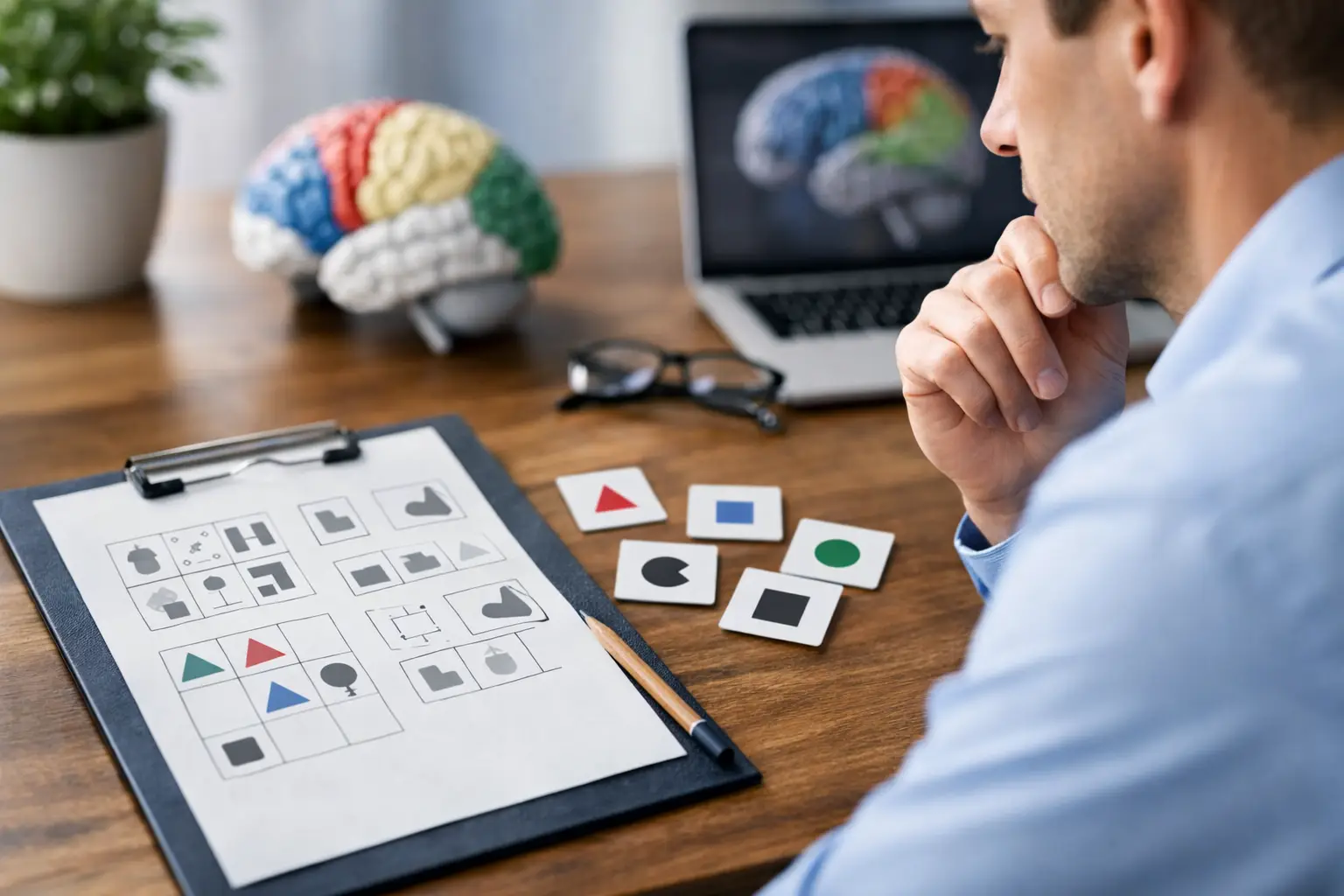
Most assessments examine several areas: short-term memory, attention, language, visual-spatial processing, executive function, and orientation. Executive function includes the brain’s ability to organize, shift between tasks, make decisions, and control impulses. This is why someone may remember a childhood story with striking clarity yet struggle to follow a recipe, manage medications, or keep up with a multistep task.
Brief office-based screens are often used to identify whether more evaluation is needed. Longer neuropsychological evaluations go deeper, comparing performance across multiple domains and looking for patterns that may fit mild cognitive impairment, dementia, depression-related cognitive symptoms, learning differences, or other conditions.
The number matters, but context matters more. Age, education, native language, sensory limitations, sleep quality, medications, pain, stress, recent illness, and even anxiety about being tested can influence performance. A person who barely slept for three nights may not test like the person they are on a well-rested morning.
A Low Score Is a Signal, Not a Sentence
The most dangerous reaction to an abnormal result is panic. The second most dangerous reaction is denial.
A lower-than-expected score can have many explanations. Vitamin deficiencies, thyroid problems, dehydration, infections, poorly controlled diabetes, depression, untreated sleep apnea, hearing loss, medication side effects, alcohol use, and chronic stress can all affect clear thinking. Some of these contributors can be addressed. That is why a serious evaluation should not stop at a memory quiz.
At the same time, persistent change should never be dismissed as “just getting older.” Normal aging may mean taking longer to retrieve a name or needing a reminder now and then. It should not routinely mean losing the ability to follow familiar directions, handle finances, complete established work, recognize loved ones, or safely manage daily life.
The question is not simply, “Did I miss a few answers?” The question is, “Has there been a meaningful change from my normal, and is it affecting function?” Family members often notice these changes first because they see the contrast over months or years.
One test result can be noisy. A trend is harder to ignore. Repeating an assessment at appropriate intervals, preferably with the same clinician or a comparable method, can show whether cognition is holding steady or moving in the wrong direction. That baseline may become one of the most valuable pieces of information you have.
Screening Is Not a Diagnosis
Online quizzes, app-based memory games, and short checklists can be useful conversation starters. They are not diagnostic tools. They may be influenced by familiarity with technology, test-taking style, vision, hearing, or the simple fact that some people are good at puzzles.
A clinician may use screening results alongside a medical history, medication review, physical and neurological exam, lab work, mood assessment, sleep history, and sometimes brain imaging. If symptoms are complex or a diagnosis remains unclear, comprehensive neuropsychological testing can offer a much sharper picture.
This may feel frustrating to anyone who wants a fast answer. But the brain is not a simple machine, and a rushed conclusion can lead to the wrong treatment, the wrong level of fear, or missed opportunities to address a reversible cause.
When It Is Time to Seek a Real Evaluation
If a cognitive concern is recurring, document it. Write down what happened, when it began, how often it occurs, whether it is worsening, and what else was happening at the time. Specific examples are far more useful than saying, “Mom seems off” or “I feel foggy.”
Pay particular attention when changes affect safety, independence, or judgment. Examples include repeated missed medications, unusual financial decisions, becoming disoriented in known places, difficulty following conversations, frequent falls, personality changes, or new trouble performing routine tasks. Sudden confusion, new weakness, facial drooping, severe headache, speech changes, or loss of coordination require urgent medical attention.
Bring a trusted family member or caregiver to the appointment when possible. Cognitive changes can limit insight, and loved ones may provide details that the person being evaluated does not recognize or remember. This is not about taking away independence. It is about getting an honest view of what is happening while there is still time to act.
Why Brain Maintenance Belongs in the Conversation
A cognitive test measures performance. It does not explain every force shaping that performance.
The brain is metabolically demanding. It produces waste as it works, and research into the glymphatic system has brought fresh attention to how the brain moves fluid and clears certain metabolic byproducts, especially during quality sleep. Think of it as part of the brain’s overnight housekeeping system. When sleep is fragmented, inflammation is high, vascular health is poor, or the body is under constant strain, that maintenance environment may be compromised.
This is not a promise that one habit, food, or supplement can prevent or reverse Alzheimer’s or Parkinson’s. Those conditions are complex, and anyone making that promise is oversimplifying a serious medical reality. Still, brain health is not passive. The choices that support circulation, sleep, metabolic health, movement, stress regulation, social connection, and nutrition are not small details. They are the environment in which the brain has to function, repair, and maintain itself.
For many people, the first practical step after cognitive testing is a hard look at sleep. Snoring, gasping, daytime exhaustion, and waking unrefreshed deserve attention, especially when memory is changing. Then look at medications, blood pressure, blood sugar, alcohol intake, physical activity, hearing, and nutrient status with a qualified professional.
This systems-level view is central to the work behind My Brain Restore: brain support should not be reduced to chasing a symptom or temporarily stimulating a neurotransmitter. The question is broader. Are you supporting the conditions the brain needs to clear waste, recover, and remain resilient?
Use the Result to Start a Better Conversation
The best outcome of cognitive testing is not a label. It is a clearer next step.
If results are normal but concerns remain, ask what could be affecting daily clarity and when follow-up makes sense. If a screening score is concerning, ask whether further neuropsychological testing, laboratory work, sleep evaluation, hearing assessment, medication adjustments, or specialist care is appropriate. If a diagnosis has already been given, ask what changes should be tracked and which support strategies can protect safety and quality of life now.
Do not wait for a crisis to begin paying attention. The earlier a change is documented, the more time you have to investigate contributing factors, build a care plan, involve family, and make decisions from a place of strength rather than emergency.
A cognitive score is not your identity. It is information. Treat it with neither blind fear nor blind faith, then use that information to ask better questions, protect the life you value, and give your brain the attention it has been asking for.
Similar Posts
An Alternative to Memory Loss Drugs: What Helps?
Looking for an alternative to memory loss drugs? Learn where medicine helps, what lifestyle can change, and how to protect brain health safely over time.
Can Brain Clearance Support Healthy Aging?
Can brain clearance support healthy aging? Learn how sleep, movement, and daily brain-support habits may help protect long-term cognitive resilience today.
A Complete Guide to Healthy Brain Maintenance
This complete guide to healthy brain maintenance explains sleep, movement, nourishment, stress, and brain clearance habits that protect cognitive resilience.
Supplements for Cognitive Decline: What Helps?
Supplements for cognitive decline may support memory, focus, and brain resilience. Learn what matters most and how to choose wisely.
Nootropic Safety for a Brain You Can Trust
Nootropic safety starts with knowing what is in your formula, how it affects your medications, and whether its promises outrun credible human evidence.
Best Botanicals for Brain Inflammation
Learn how botanicals for brain inflammation may support neuroprotection, calm immune stress, and complement a brain-clearing wellness strategy.