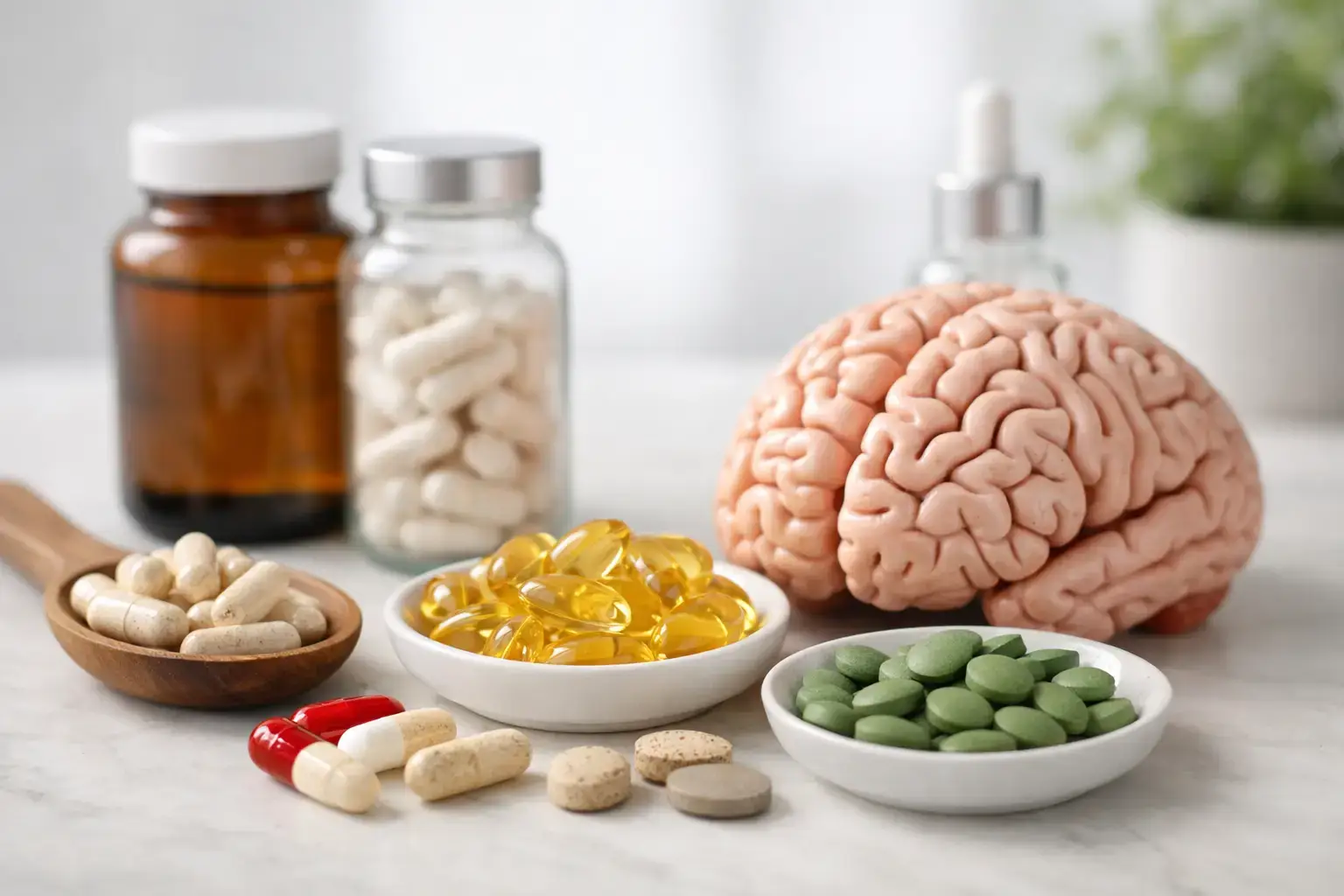
Best Supplements for Dementia Prevention
When people search for the best supplements for dementia prevention, they are rarely looking for a trendy wellness hack. They are looking for a way to stay themselves. They are thinking about the parent who forgot familiar names, the spouse repeating the same question, or the family history that suddenly feels a lot less abstract. That urgency matters, because brain decline does not usually start the day symptoms become obvious. It builds quietly, often years earlier, while inflammation, oxidative stress, poor sleep, vascular strain, and impaired waste clearance begin to burden the brain.
That is why the supplement conversation needs to be more honest. No capsule can guarantee that someone will never develop dementia. Anyone claiming that is selling fantasy. But there are supplements with plausible mechanisms, human data, and real relevance for the pathways that shape long-term cognitive resilience. The smartest approach is not to chase miracle ingredients. It is to support the systems that keep the brain nourished, protected, and able to clear what does not belong there.
What makes the best supplements for dementia prevention worth considering?
The strongest candidates tend to work through a handful of core mechanisms. They help calm chronic inflammation, defend against oxidative damage, support mitochondrial energy production, improve vascular function, and, in some cases, support the brain’s nighttime cleanup process. Think of the brain less like a static organ and more like a high-performance control center with enormous maintenance demands. If the sink is clogged and the dishwasher is failing, waste builds up. Over time, that is not a small problem.
This is one reason so many conventional conversations about brain aging feel incomplete. They focus on symptoms after decline is underway. A prevention-minded strategy asks a tougher and more useful question: what helps the brain stay cleaner, better fueled, and more resilient before the damage becomes obvious?
The best supplements for dementia prevention often target multiple pathways
Omega-3s are still foundational
If one category consistently earns its place in a serious brain-health discussion, it is omega-3 fatty acids, especially DHA and EPA. DHA is a major structural fat in the brain, and low omega-3 status has been associated with poorer cognitive outcomes in many observational studies. EPA also matters, particularly for inflammation and vascular health.
The nuance is that omega-3s are not magic, and study results are mixed. People with poor baseline intake, higher inflammatory burden, or early cognitive concerns may benefit more than someone who already eats fatty fish several times a week. Quality matters too. Oxidized fish oil is not doing anyone favors. For prevention, omega-3s make the most sense as part of a long-term strategy, not a short burst of wishful thinking.
Curcumin is promising, but formulation matters
Curcumin, the active compound in turmeric, keeps showing up for a reason. It has anti-inflammatory and antioxidant properties, and researchers have long been interested in how it may interact with pathways involved in neurodegeneration. The problem is absorption. Standard curcumin is notoriously hard for the body to use.
That means a cheap bottle with a big number on the label may look impressive and still underperform. If curcumin is part of the plan, bioavailability matters. It is also not ideal for everyone, particularly people on certain medications or those with gallbladder issues. This is where prevention becomes more sophisticated than marketing. The ingredient is not enough. Delivery, tolerance, and consistency all count.
Magnesium may matter more than most people realize
Magnesium does not get the dramatic headlines, but it belongs in this conversation. It supports nerve signaling, sleep quality, stress regulation, and vascular health. Those are not side issues. Poor sleep and chronic stress are major enemies of brain resilience, and sleep is when the brain performs much of its waste-clearing work.
Not every form is equal. Magnesium L-threonate gets special attention because of its potential relevance to brain levels, while glycinate is often chosen for calm and sleep support. The best choice depends on the person. Someone dealing with constipation may respond differently than someone whose main issue is restless sleep and mental tension. Prevention is rarely one-size-fits-all.
B vitamins can be crucial when homocysteine is high
B6, B12, and folate deserve real respect, especially for adults with elevated homocysteine, low dietary intake, digestive issues, or age-related absorption problems. High homocysteine has been linked with brain atrophy and cognitive decline. In those cases, B vitamins are not just generic wellness support. They may address a meaningful risk signal.
This is one of the clearest examples of why testing can matter. If homocysteine is already in a healthy range and nutrient status is solid, more is not always better. But if levels are high, ignoring that is a mistake. The best prevention strategy is guided, not random.
Vitamin D belongs in the brain-health conversation
Vitamin D is more than a bone nutrient. It influences immune balance, inflammation, and neurological function, and low levels are common in older adults. Low vitamin D status has repeatedly been associated with poorer cognitive outcomes.
Again, context matters. The goal is not megadosing in the dark. It is correcting insufficiency and maintaining a healthy range. For many people, this is low-hanging fruit. When the foundation is weak, the rest of the plan gets shakier.
Polyphenols and botanical compounds deserve attention
Compounds from blueberries, green tea, grape seed, and other polyphenol-rich plants are getting attention because they help defend against oxidative stress and may support vascular function. That matters because the brain is highly vulnerable to oxidative damage and deeply dependent on healthy blood flow.
Botanicals can be useful, but this is where hype often outruns evidence. Some ingredients have exciting mechanistic data but limited human outcomes. Others are dosed too low in formulas to matter. A flashy label can distract from the simple question that counts: is there a meaningful amount of the right compound, in a form the body can actually use?
Why sleep and clearance support change the discussion
Many articles on dementia prevention stop at antioxidants. That is not enough. The brain is not only vulnerable to damage. It also has to clear metabolic waste effectively, especially during sleep. This is where the glymphatic system has changed the conversation. You can think of it as part of the brain’s housekeeping network, a kind of nighttime dishwasher that helps wash out waste products when sleep is deep and structured.
If that cleanup cycle is impaired by poor sleep, stress, aging, alcohol, sleep apnea, inflammation, or other factors, the brain may be forced to function in a dirtier internal environment. That does not mean one supplement can fix the entire system. It means a prevention strategy should respect the fact that brain health is not only about feeding neurons. It is also about helping the brain maintain itself.
This systems-level view is why formulas designed around sleep quality, inflammatory balance, circulation, and clearance pathways can make more sense than isolated single-ingredient thinking. My Brain Restore has built its approach around exactly that neglected idea: support the brain’s maintenance pathways, not just the symptoms people notice after the fact.
What to avoid when choosing supplements
The supplement industry has a labeling problem. Big promises, tiny doses, proprietary blends, and vague claims have trained consumers to confuse excitement with evidence. For dementia prevention, that is dangerous. Fear makes people easy to manipulate.
A better standard is simple. Look for transparent dosing, ingredients with a believable mechanism, forms that are known to absorb, and a rationale that fits the person taking it. If a formula throws together twenty brain ingredients at fairy-dust levels, it is probably built for marketing, not outcomes.
It is also wise to remember that supplements can interact with medications, especially blood thinners, blood pressure drugs, diabetes medications, and sedatives. Older adults often have more than one condition and more than one prescription. That does not rule supplements out. It means the strategy needs adult supervision.
The real answer to prevention is not one pill
People want the single best supplement because fear pushes us toward simple answers. The truth is less convenient and more hopeful. Brain resilience is built through layers. Nutrient status, sleep quality, blood sugar control, exercise, vascular health, inflammation, toxin burden, and waste clearance all play a role. Supplements are most powerful when they reinforce those layers instead of pretending to replace them.
So what are the best supplements for dementia prevention? For many people, the shortlist starts with omega-3s, magnesium, B vitamins when indicated, vitamin D when low, and selected anti-inflammatory or polyphenol-rich compounds with strong formulation quality. But the deeper answer is this: the best supplement is the one that supports the pathway your brain is struggling with most, taken consistently, in the right form, as part of a broader plan.
That may not be the easy answer. It is the honest one. And when the stakes are memory, identity, and independence, honest is exactly where you want to start.
Similar Posts
A Complete Guide to Healthy Brain Maintenance
This complete guide to healthy brain maintenance explains sleep, movement, nourishment, stress, and brain clearance habits that protect cognitive resilience.
Glymphatic System Supplement Review Explained
Read a glymphatic system supplement review that weighs ingredients, evidence, safety, sleep habits, and smarter questions before you buy brain support now.
How to Protect Brain Health as You Age
Learn how to protect brain health as you age with science-backed habits that support sleep, circulation, brain clearance, and long-term resilience.
Sleep Quality and Brain Restoration Explained
Sleep quality and brain restoration are closely connected. Learn how deep sleep supports the brain’s nightly cleanup, resilience, and clear daily thinking.
Brain Clearance Pathway Support That Matters
Learn how brain clearance pathway support may help the glymphatic system, sleep-driven repair, and long-term cognitive resilience naturally.
Third Party Supplement Testing Review for Brain Health
A third party supplement testing review explains how to verify identity, purity, potency, and contaminants before choosing brain health formulas wisely.