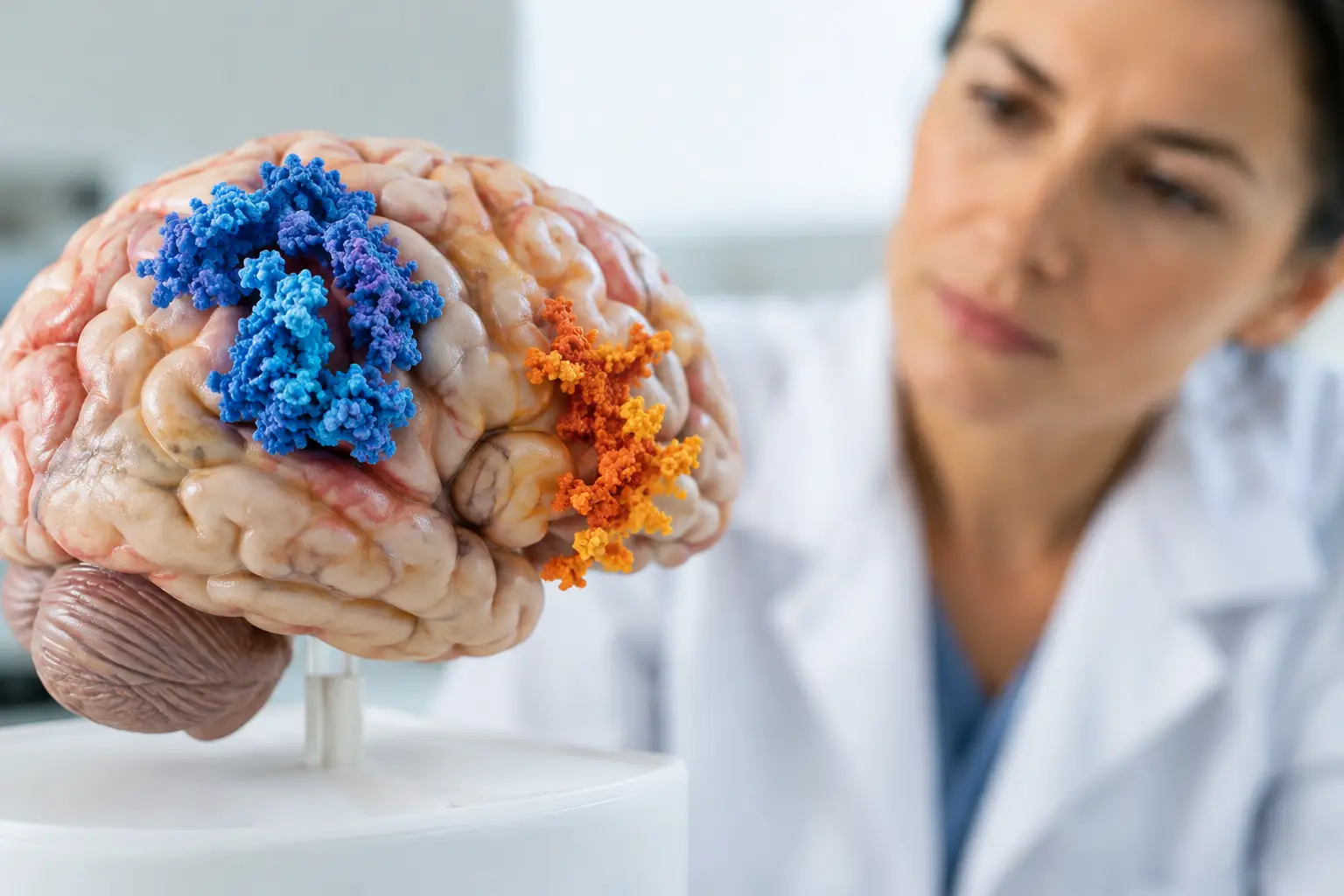
Understanding Amyloid and Tau Proteins Clearly
A brain can begin changing years before a family notices missed appointments, repeated questions, a new tremor, or a personality that no longer feels familiar. That is what makes understanding amyloid and tau proteins so urgent. These proteins are not simply scientific jargon attached to Alzheimer’s disease. They are central clues in a much larger question: what happens when the brain’s maintenance, repair, and waste-clearance systems can no longer keep pace?
For too long, the public conversation has treated cognitive decline as though it begins only when symptoms become impossible to ignore. But biology does not wait for a diagnosis. The brain is constantly producing proteins, using them, recycling them, and clearing what it no longer needs. When that cycle is disrupted over years, certain proteins can accumulate in ways associated with neurodegeneration.
Understanding Amyloid and Tau Proteins in the Brain
Amyloid and tau are normal proteins with very different jobs. Problems arise not because either protein exists, but because protein production, folding, transport, and removal can become unbalanced.
Amyloid-beta is a small protein fragment created when a larger protein in the cell membrane is cut apart. The brain produces amyloid-beta during ordinary activity. In healthy conditions, much of it is cleared away through several pathways, including movement across the blood-brain barrier, cellular cleanup processes, and the glymphatic system – a fluid-based waste-clearance network that is especially active during deep sleep.
Tau is different. It is a protein found inside nerve cells, where it helps stabilize the microscopic tracks that move nutrients and materials through the cell. Think of tau as part of the internal rail system that helps a neuron function. When tau becomes abnormally altered, often through excessive phosphorylation, it can detach from those tracks, misfold, and clump together. These tangles can interfere with the cell’s ability to transport what it needs to survive.
Neither process should be reduced to a cartoon villain. Amyloid plaques and tau tangles are strongly associated with Alzheimer’s disease, but the relationship is complex. Some people carry significant amyloid buildup without obvious symptoms. Others have cognitive impairment driven by vascular injury, inflammation, Lewy body disease, medication effects, depression, sleep disorders, or a combination of factors. The brain rarely follows a single-cause story.
The Plaque and Tangle Problem
When amyloid-beta is not adequately cleared, individual fragments can stick together. They may form soluble oligomers first, then larger deposits known as plaques in the spaces between neurons. Many researchers believe these smaller, soluble forms may be particularly disruptive because they can affect communication at synapses, the junctions where brain cells exchange signals.
Tau pathology generally develops inside neurons. As tau loses its normal shape and function, it may assemble into twisted fibers called neurofibrillary tangles. In Alzheimer’s disease, tau changes often begin in brain regions involved in memory and may spread through connected networks as disease advances. The amount and distribution of tau pathology tend to track more closely with symptom severity than amyloid burden alone.
That distinction matters. Amyloid may help set a harmful process in motion, while tau injury may more directly reflect the loss of functioning brain cells. Yet it is not an either-or debate. Amyloid, tau, inflammation, metabolic dysfunction, impaired blood flow, oxidative stress, and disrupted sleep can reinforce one another. A clogged sink is rarely caused by one thing. Debris accumulates, water stops moving freely, and the backup creates more damage.
Why Brain Clearance Has Entered the Conversation
The glymphatic system has changed how many researchers think about brain housekeeping. This system uses cerebrospinal fluid and fluid channels around blood vessels to help move metabolic waste out of brain tissue. It appears to work most effectively during sleep, particularly deep, restorative sleep, when brain cells change their volume and fluid exchange increases.
This does not mean one good night of sleep can erase plaques or tangles. It also does not mean every person with poor sleep will develop Alzheimer’s disease. But chronic sleep disruption deserves more respect than it has historically received. Sleep apnea, fragmented sleep, irregular sleep schedules, alcohol-related sleep disruption, and untreated insomnia may all reduce the brain’s opportunity to perform essential maintenance.
Age can complicate the picture. So can cardiovascular risk, diabetes, chronic stress, head injury, inactivity, and genetic factors such as APOE status. These influences do not guarantee a person’s future, but they can shift the terrain on which brain resilience is built.
This is why a clearance-based view of brain health is so compelling. Rather than asking only, “How do I boost memory today?” it asks a more foundational question: “Are the systems that nourish, protect, and clear the brain being supported every day?”
What Amyloid and Tau Do Not Tell You
Biomarkers can be valuable, but they require context. A brain scan, spinal fluid test, or blood-based biomarker may help clinicians assess whether amyloid or tau changes are present. They cannot replace a full medical evaluation. Memory concerns deserve careful attention because treatable conditions can mimic or worsen cognitive decline.
Thyroid disorders, vitamin deficiencies, medication side effects, hearing loss, mood disorders, infections, sleep apnea, and vascular changes can all affect thinking. A sudden change in confusion, speech, balance, or weakness is not a wellness problem to troubleshoot at home. It requires urgent medical care.
There is also a trade-off in how we talk about risk. Fear can motivate action, but fear without clarity can paralyze families. The honest message is stronger: amyloid and tau research has revealed meaningful warning signs, yet no single protein, test, supplement, or lifestyle habit can offer a personal guarantee. Brain health is a long game, and early, consistent attention is more useful than panic.
Supporting the Conditions for Brain Maintenance
People looking for agency should focus on the conditions that influence the whole system, not chase a miracle claim. The strongest foundation is remarkably practical: protect sleep, manage blood pressure and blood sugar, move the body regularly, eat in a way that supports metabolic and vascular health, stay socially and mentally engaged, and address hearing or mood changes early.
Sleep deserves special emphasis. If someone snores loudly, wakes gasping, feels exhausted despite enough time in bed, or has witnessed breathing pauses, evaluating possible sleep apnea may be one of the most meaningful steps they can take. Deep sleep is not laziness or lost productivity. It is part of the brain’s overnight maintenance shift.
Nutrition and targeted botanical support may have a role, but they should be framed honestly. The evidence for specific ingredients varies widely by compound, dose, formulation, and outcome measured. A quality brain-health formula should support a broader lifestyle and medical plan, not become a substitute for diagnosis, prescribed treatment, or the hard work of changing daily habits.
This systems perspective is the reason My Brain Restore focuses on supporting the brain’s natural maintenance and clearance pathways rather than promising to replace medical care or reverse a disease. For people who feel dismissed by a symptom-only approach, that distinction matters. It acknowledges both the seriousness of neurodegeneration and the value of acting before the system is overwhelmed.
A More Useful Way to Think About Risk
The most productive response to amyloid and tau is neither denial nor obsession. It is informed attention. If cognitive symptoms are emerging, document what is changing, when it began, what affects it, and which medications or health conditions may be involved. Bring a trusted family member to appointments when possible, because subtle changes are often easier for others to observe.
If symptoms are not present but concern is high because of age or family history, use that concern as a reason to strengthen the basics now. Ask whether sleep is truly restorative. Check cardiovascular markers. Make movement nonnegotiable. Build meals around whole foods more often than convenience foods. Protect connection, purpose, and curiosity.
The brain is not a machine with one replaceable part. It is a living system that depends on circulation, sleep, immune balance, cellular energy, and the steady removal of waste. Understanding amyloid and tau proteins gives us a clearer view of what can go wrong. More importantly, it gives us a reason to treat daily brain maintenance as something worth protecting long before decline demands our attention.
Similar Posts
How to Read Brain Supplement Labels Like a Researcher
Learn how to read brain supplement labels, spot weak formulas, assess doses and safety, and choose support grounded in real science, not hype or marketing.
A Nighttime Brain Recovery Routine That Works
Build a nighttime brain recovery routine that supports deep sleep, glymphatic clearance, and the daily habits that protect long-term cognitive resilience.
How to Support Glymphatic Drainage
Learn how to support glymphatic drainage with sleep, movement, hydration, and daily habits that help the brain clear waste more efficiently.
Natural Support for Parkinsons That Makes Sense
Natural support for Parkinsons starts with sleep, movement, nutrition, and brain-clearing pathways that help protect function and daily life.
Best Ingredients for Long Term Brain Wellness
A clear look at the best ingredients for long term brain wellness, glymphatic clearance, healthy aging, and neurological resilience over time for adults.
How to Protect Brain Health as You Age
Learn how to protect brain health as you age with science-backed habits that support sleep, circulation, brain clearance, and long-term resilience.