Best Botanicals for Brain Inflammation
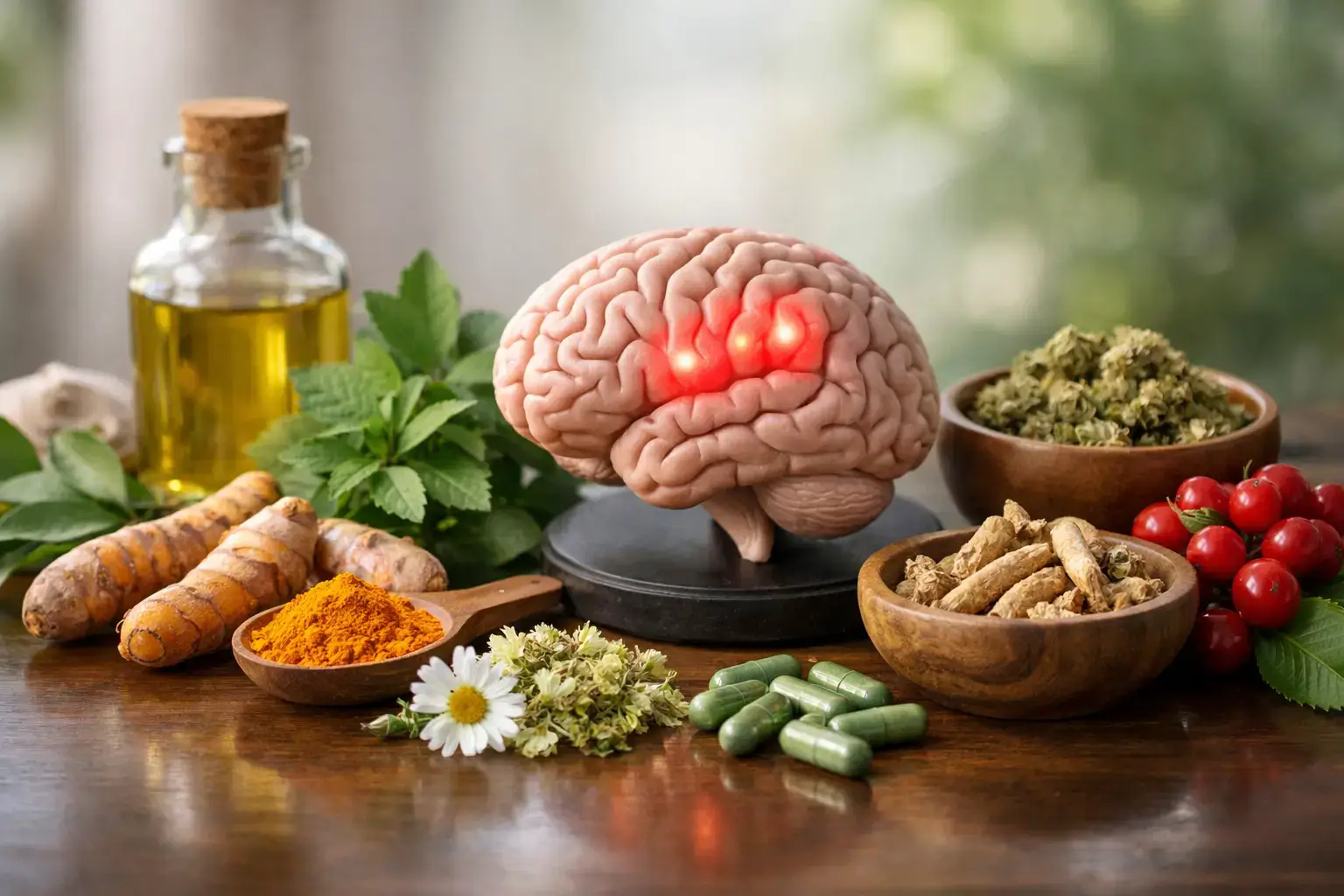
When people talk about memory loss, brain fog, tremors, or cognitive slowdown, they often focus on symptoms. But symptoms are the smoke. One of the fires underneath can be neuroinflammation – the brain’s immune alarm system stuck in the on position. That is why interest in botanicals for brain inflammation has surged among families looking for answers beyond the usual wait-and-watch model.
This matters because inflammation in the brain is not just about feeling off. It can influence how neurons communicate, how well the brain clears waste, how resilient brain cells remain under stress, and how quickly decline may progress in vulnerable people. If the brain is like a sink, inflammation can act like sludge in the drain. Everything backs up. Signaling gets messy. Cleanup slows down. Function suffers.
Why brain inflammation deserves serious attention
The older model of brain health asked a narrow question: what symptom do we suppress? The more useful question is broader: what is disrupting the brain’s ability to protect, repair, and clear itself? That shift matters for people worried about Alzheimer’s, Parkinson’s, dementia risk, post-viral cognitive changes, toxin burden, or age-related decline.
Brain inflammation is not always bad. In the short term, it is part of defense and repair. The problem starts when inflammatory signaling becomes chronic, exaggerated, or poorly resolved. Microglia, the brain’s resident immune cells, can become overactivated. Oxidative stress can rise. The blood-brain barrier may become more vulnerable. Sleep quality can fall off, which is especially troubling because the brain performs critical waste clearance during deep sleep.
That is where a systems view becomes far more powerful than a symptom-only view. If inflammation is interfering with the brain’s maintenance pathways, then support has to go beyond a single neurotransmitter or a quick energy boost. You need a strategy that respects the whole terrain.
What botanicals for brain inflammation can and cannot do
Let’s be clear. Botanicals are not magic, and they are not a substitute for medical care when serious neurological symptoms are present. They also do not work the same way in every person. Dose, extract quality, absorption, medication interactions, underlying disease, sleep, blood sugar, and toxic burden all shape results.
What well-chosen botanicals may do is help modulate inflammatory pathways, reduce oxidative stress, support circulation, influence cellular signaling, and in some cases complement the brain’s own cleanup and resilience mechanisms. That may sound modest, but it is not. Small changes at the level of chronic inflammation can matter enormously over time.
The most promising botanicals for brain inflammation
Curcumin
Curcumin, the best-known active compound in turmeric, remains one of the most studied botanicals in this space. Its appeal is simple: it has shown the ability to influence multiple inflammatory pathways at once, including signaling tied to cytokines and oxidative stress. That broad activity is part of why it keeps showing up in conversations about neuroprotection.
The catch is absorption. Standard turmeric powder is not the same as a bioavailable curcumin extract. Many people take turmeric casually and feel disappointed because very little active compound actually gets where it needs to go. Form matters here. A poorly absorbed curcumin product may look impressive on the label and still underdeliver.
Boswellia
Boswellia, derived from frankincense resin, is often discussed for joint comfort, but its anti-inflammatory potential reaches well beyond knees and hips. Certain boswellic acids appear to influence inflammatory enzymes in a way that makes Boswellia worth attention for broader inflammatory states, including those affecting the nervous system.
It is not as famous as turmeric, but that can be a mistake. For some people, Boswellia is better tolerated or works well in combination with other compounds. It may be especially appealing when the goal is to calm inflammatory pressure without leaning on a single mechanism.
Green tea extract and EGCG
Green tea’s star compound, EGCG, has drawn interest for antioxidant and anti-inflammatory effects, along with possible support for cellular resilience. In the brain, oxidative stress and inflammation often travel together. You rarely get one without the other. That makes compounds that address both sides of the problem particularly valuable.
Still, more is not always better. Highly concentrated extracts can be stimulating for some people, especially if caffeine is present. For adults already dealing with poor sleep, anxiety, or palpitations, that trade-off matters because sleep disruption itself can worsen brain cleanup and inflammatory burden.
Bacopa monnieri
Bacopa is usually marketed for memory and learning, but that framing can miss the bigger picture. Part of its value may come from helping protect neural tissue against stress, including inflammatory and oxidative stress. It has a long traditional history and a growing body of modern interest in cognition.
Bacopa tends to be subtle rather than dramatic. That frustrates people who expect a stimulant effect. But subtle can be exactly what a long-term brain support plan needs. This is not about forcing the brain to perform. It is about creating conditions that are less hostile to function.
Ginkgo biloba
Ginkgo is one of the most debated and most enduring botanicals in cognitive health. Some of its value may stem from circulation support, antioxidant activity, and effects on inflammatory signaling. Better blood flow does not solve every neurological problem, but poor circulation can absolutely make a bad situation worse.
This is also where nuance matters. Ginkgo can interact with blood thinners and is not a casual add-on for everyone. The right botanical is not just the one with the most headlines. It is the one that fits the person in front of you.
Lion’s mane mushroom
Lion’s mane is not a botanical in the strictest sense, but many consumers group it into the same natural-brain-support category. Interest in lion’s mane comes from its potential to support nerve growth factor pathways and neuroplasticity, along with possible anti-inflammatory effects.
For people worried about decline, that combination is compelling. The brain does not just need less irritation. It needs support for maintenance and repair. Lion’s mane may help on that front, though product quality varies wildly and the mushroom supplement market is full of weak formulas.
Rosemary and sage
These culinary herbs deserve more respect than they usually get. Compounds in rosemary and sage have shown antioxidant and anti-inflammatory properties, and both have a long history of use in traditional cognitive support. They are not miracle agents, but they reflect a larger truth: everyday plants can influence brain biology in meaningful ways.
Their effects are likely gentler than a concentrated extract of curcumin or Boswellia, yet they fit well into a whole-life strategy. Brain health is not built on one hero ingredient. It is built on pressure reduction from multiple angles.
Brain inflammation and the glymphatic connection
This is where the conversation gets more urgent. Inflammation does not happen in a vacuum. A stressed, inflamed brain may also struggle with waste removal. The glymphatic system – often described as the brain’s dishwasher – is deeply tied to sleep, fluid movement, and metabolic cleanup. When that system is compromised, waste can accumulate. When waste accumulates, inflammation can worsen. It becomes a vicious cycle.
That is why the smartest conversation about botanicals for brain inflammation should not stop at calming immune signaling. It should also ask whether the broader environment supports cleanup. Are you sleeping deeply enough? Is circulation compromised? Are blood sugar swings fueling inflammatory stress? Is the system overloaded by alcohol, environmental toxins, or chronic stress hormones?
This is the difference between a trend-chasing supplement approach and a real neurological support strategy. Brands like My Brain Restore have pushed this systems-level view because it addresses a blind spot in conventional brain health discussions. A clogged sink does not improve just because you mask the smell. You have to help restore flow.
How to choose wisely
If you are considering botanicals, quality is everything. Standardization, extraction method, purity testing, and dosage form matter more than flashy packaging. The label should tell you what form you are getting, not just the plant name in oversized print.
Combination formulas can be useful because brain inflammation is multifactorial. A formula that pairs anti-inflammatory botanicals with compounds that support antioxidant defenses, circulation, and restorative sleep may make more sense than a single-ingredient product. But more ingredients do not automatically mean a better formula. Sometimes they just mean smaller doses and more marketing.
If you take prescription medications, especially anticoagulants, seizure medications, sedatives, or drugs for Parkinson’s or dementia, get professional guidance before adding anything. Natural does not mean consequence-free.
The real opportunity
People facing cognitive decline are often told to accept less, wait longer, and ask fewer questions. That mindset has failed too many families. A more hopeful approach does not mean pretending botanicals are a cure. It means recognizing that inflammation, oxidative stress, sleep quality, and waste clearance are not side issues. They are central to how the brain ages and how it struggles.
The best botanicals for brain inflammation are not interesting because they are trendy. They are interesting because they may help reduce one of the pressures that keeps the brain from doing what it was designed to do – protect itself, clean itself, and keep you connected to your life. If you start there, with clarity instead of hype, you are already asking a better question than most of the system does.
Similar Posts
Support for Cognitive Decline Caregivers That Helps
Support for cognitive decline caregivers: practical ways to protect your energy, coordinate care, ask better questions, and create room for hope every day.
How to Support Healthy Cerebrospinal Fluid Flow
Learn how to support healthy cerebrospinal fluid flow with sleep, movement, hydration, and medical awareness for long-term brain resilience every day.
Natural Support for Parkinsons That Makes Sense
Natural support for Parkinsons starts with sleep, movement, nutrition, and brain-clearing pathways that help protect function and daily life.
Natural Brain Support for Family History Risks
Natural brain support for family history concerns starts with sleep, movement, and brain-clearance habits you can practice long before symptoms appear.
Supplements for Cognitive Decline: What Helps?
Supplements for cognitive decline may support memory, focus, and brain resilience. Learn what matters most and how to choose wisely.
How to Protect Brain Health as You Age
Learn how to protect brain health as you age with science-backed habits that support sleep, circulation, brain clearance, and long-term resilience.